
Power Connector Selection Guide
High Voltage Connector Types: A Selection Guide
Choosing among high voltage connector types is not a matter of matching a housing shape. The useful starting point is the complete interface: how power enters the assembly, what the electrical profile looks like, where the connector will operate, and which documents must be available before approval. A connector can look mechanically compatible while its insulation design, termination method, or validation scope does not match the project.
Engineering decision: shortlist a connector family only after the drawing, voltage profile, current per contact, environment, mating conditions, and required test evidence are defined.
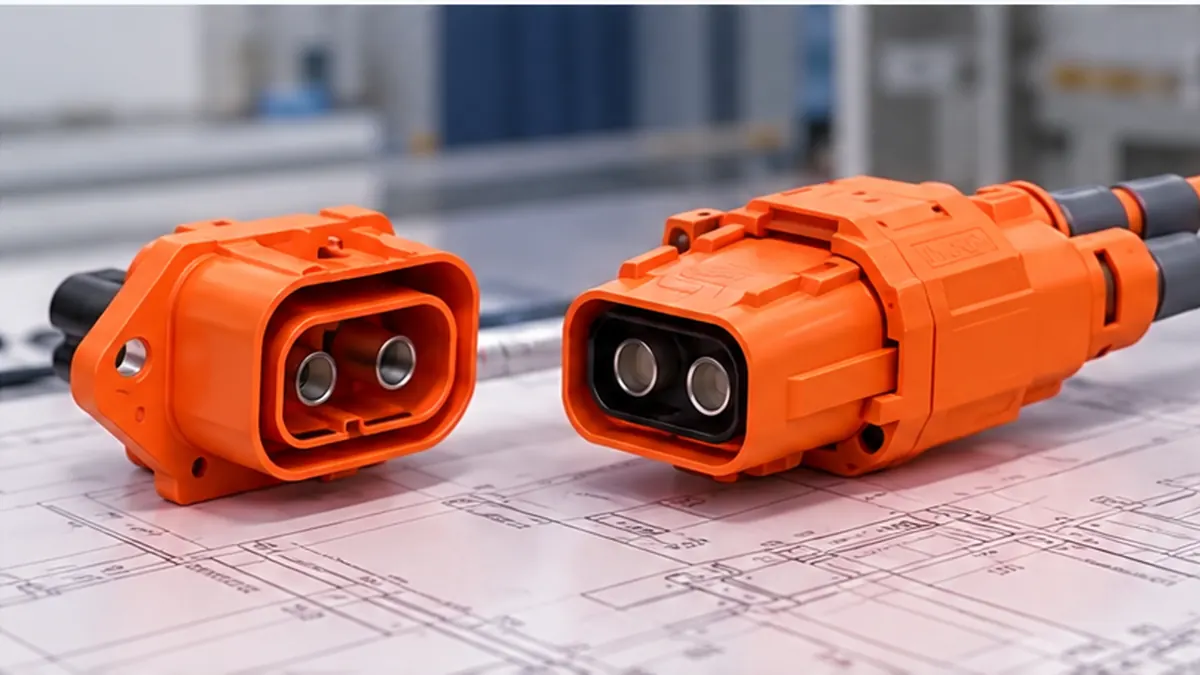
Start with the interface, not a connector name
Search results often group connectors by shape or application. That is useful for orientation, but it is too broad for part approval. The first procurement question is where the interface sits in the system. A board-to-board connection has different mechanical limits from a wire-to-board power entry, while a cable connector may place more emphasis on termination, strain relief, sealing, and service access.
The Power Connectors for DC and High-Current Interface Projects page shows the product-family context for PCB, board-to-board, wire-to-board, and battery connector formats. The final connector type still depends on the customer’s drawing and application requirements.
| Connector family | Where it may fit | What to verify before selection |
|---|---|---|
| Board-to-board power connector | Power transfer between PCBs or modules | Mating height, board tolerance, current path, heat around the interface, and assembly sequence |
| Wire-to-board power connector | Power entry to a PCB or control unit | Crimp specification, wire range, retention, polarization, cable routing, and inspection method |
| Wire-to-wire connector | Harness joints or removable cable sections | Termination process, strain relief, keying, service access, and environmental exposure |
| Circular or rectangular cable connector | Panel, enclosure, equipment, or field connection | Mounting geometry, sealing target, shielding need, mating control, and available test records |
| Specialized coaxial or mixed-interface connector | Applications combining power with sensitive or controlled signals | Interface definition, isolation strategy, shielding continuity, pin assignment, and project-specific validation |
Build the electrical and environmental envelope
A voltage label by itself is not enough. Engineering should separate continuous operating conditions, repetitive peaks, and transient events, then confirm which condition governs insulation review. The supplier should not infer these values from a generic application description.
Define the electrical conditions
- Voltage profile: provide the normal operating condition, expected peaks, and transient requirement from the system design.
- Current path: state current per contact, duty cycle, conductor arrangement, and any derating conditions used by the project.
- Isolation requirement: identify the required clearance, creepage, insulation material, and safety constraints from the drawing or approved specification.
- Mating state: confirm whether the connector is mated only during installation or may be serviced during equipment life.
Describe the real operating environment
Humidity, contamination, altitude, temperature cycling, vibration, and enclosure design can change the insulation and mechanical review. Do not ask the supplier for an undefined “outdoor” or “industrial” connector. State the installation location and the environmental requirement that the finished system must meet.
Risk check: when the project has no agreed voltage envelope or environmental classification, any connector recommendation is provisional. Record the missing inputs before samples are ordered.
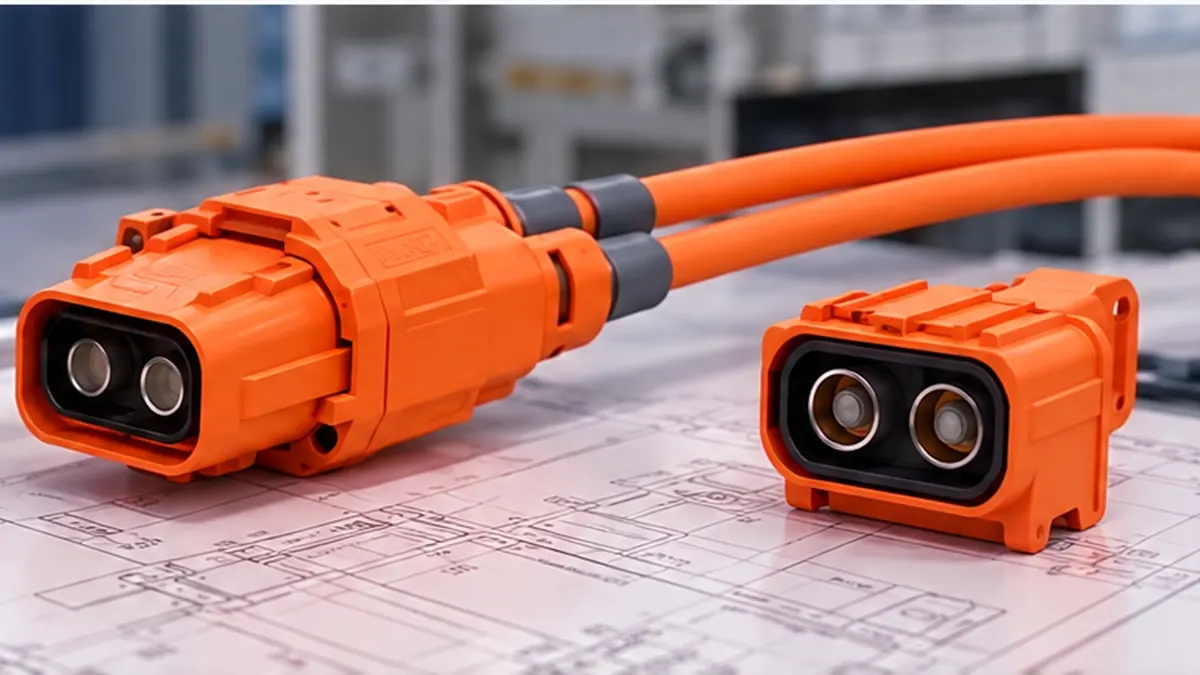
Treat datasheets as inputs, not final approval
Two datasheets can use similar terms while applying different test conditions or scopes. Procurement should compare the definitions behind each rating and confirm whether the data applies to the full mated connector, an individual component, or a specific test setup. Missing context should become an RFQ question rather than an assumption.
| Document or evidence | Procurement use | Review limitation |
|---|---|---|
| Product drawing and 3D model | Checks interface, mounting, cable exit, keying, and assembly space | Does not prove electrical or environmental performance |
| Material and process information | Supports review of insulation, terminals, plating, and manufacturing control | Must match the quoted configuration and revision |
| Test plan or test report | Shows what was tested, under which conditions, and against which acceptance criteria | Confirm sample configuration, test scope, date, and traceability |
| Sample inspection record | Supports dimensional and assembly review before production approval | One sample does not replace production control documentation |
Review supplier capability against the project scope
Supplier capability should be tied to a defined deliverable. Company materials available for this article describe engineering support that may include Pro-E modeling, Moldflow analysis, ABAQUS terminal stress analysis, and SI simulation. These activities are project-dependent; the RFQ should state which analysis, drawing output, or test documentation is required.
The same rule applies to manufacturing. Tooling, stamping, injection molding, assembly, and inspection may be relevant depending on the connector design. Ask which steps apply to the quoted part, which are controlled by the supplier, and which tests may be arranged externally. A broad capability list is not a substitute for a project quality plan.
Prepare an RFQ that can be reviewed
A useful RFQ gives engineering enough information to reject unsuitable options early. Send the latest drawing or model, the target interface, the electrical and environmental requirements, expected volume, sample needs, and the documentation required for approval. For adjacent connector categories, review the LinkManu product overview.
- Confirm whether the request is for a new design, a compatible alternative, or a review of an existing part.
- Provide pitch, mating height, pin or pole arrangement, cable direction, and packaging limits from the drawing.
- State current, voltage, temperature, environment, and safety requirements without relying on an application label alone.
- List required sample quantities, inspection records, test items, and approval documents.
- Ask the supplier to identify assumptions, exclusions, and information still needed before quotation.
Next step before samples
Before ordering samples, freeze the drawing revision and confirm the interface dimensions, mating direction, voltage profile, current per contact, environment, test documentation, and supplier responsibilities. When these inputs are ready, contact LinkManu for a project review based on the actual RFQ scope.
FAQ
What are the main high voltage connector types?
Common groups include board-to-board, wire-to-board, wire-to-wire, cable, circular, rectangular, coaxial, and mixed-interface connectors. The useful category is the one that matches the system interface and review requirements.
How should I identify the correct connector family?
Start with the mating interface, drawing, termination method, voltage profile, current path, environment, and service conditions. Do not identify a part from housing appearance alone.
Which parameters should be confirmed with the supplier?
Confirm drawing revision, pitch, mating height, positions, current, voltage, temperature, material requirements, environment, test items, and required documentation.
Is a datasheet enough for production approval?
No. Approval normally also requires project drawings, configuration-specific evidence, sample review, and the documents defined by the customer’s quality process.
Send Your Connector Requirement
Share the drawing, application conditions, target interface, sample plan, and required documentation for an engineering and sourcing review.

Technical content reviewed by LinkManu Engineering Team
Prepared by LinkManu Editorial Team for B2B connector engineers, sourcing teams, and product development projects.