
Connector cross reference
Connector Cross-Reference & Alternative Review
LinkManu reviews existing connector part numbers, drawings, datasheets, samples, and application requirements to help engineering and sourcing teams evaluate possible connector alternatives. A cross-reference recommendation should be confirmed by mechanical fit, mating interface, electrical performance, material selection, and project validation before production use.
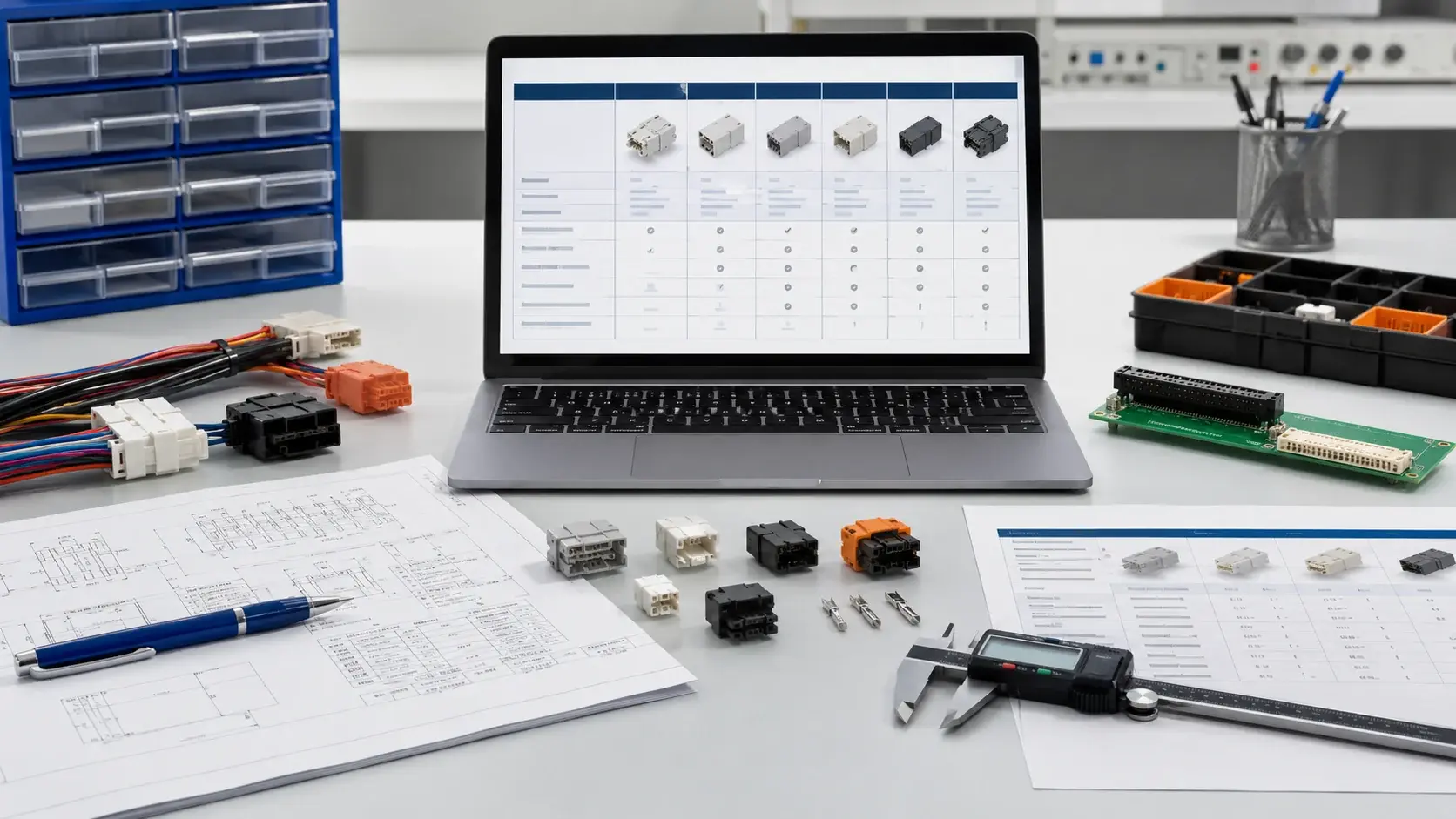
Send the current part number, connector photos, drawing, PCB layout, mating connector details, or datasheet. Our team will review whether a standard connector, modified connector, custom connector, or cable assembly direction is suitable for your project.
Need a connector replacement or compatible alternative?
Submit your existing part number, drawing, datasheet, or sample photo for an engineering review. Include the application, target quantity, and any known pitch, pin count, current, voltage, stack height, mounting, or cable-side requirements.
What LinkManu Reviews During Cross-Reference
A connector cross reference is not only a catalog match. Even when two connectors look similar, differences in housing geometry, terminal structure, plating, contact force, soldering process, mating tolerance, and operating environment can affect project risk.
| Review Area | What We Check | Why It Matters |
|---|---|---|
| Mechanical fit | Pitch, pin count, stack height, mating interface, PCB footprint, panel opening, orientation, and locking structure. | Small dimensional differences can affect assembly, mating, retention, or board layout compatibility. |
| Electrical requirements | Current rating, voltage, signal speed, impedance, shielding, grounding, and power-signal separation when applicable. | Electrical performance must match the real application, not only the connector appearance. |
| Material and plating | Housing resin, contact material, plating thickness, temperature range, flammability, and corrosion expectations. | Material differences can affect reliability, soldering, wear, and environmental performance. |
| Manufacturing feasibility | Standard availability, tooling needs, prototype feasibility, sample schedule, MOQ, packaging, and inspection plan. | A technically possible replacement still needs a manufacturable sourcing path. |
| Validation plan | Sample mating check, insertion and extraction force, dimensional inspection, electrical testing, and project-specific validation. | Final approval should be based on samples and application testing before volume purchasing. |
Connector Types We Can Review
Cross-reference support is strongest when the requirement belongs to a connector family that LinkManu already supports through product design, tooling, molding, stamping, assembly, and inspection workflows.
Board-to-Board Connectors
Pitch, pin count, stack height, mating direction, SMT footprint, signal speed, and mechanical guidance review.
Floating Board-to-Board Connectors
Floating amount, mating tolerance, stack height, vibration conditions, and power-signal combination review.
High-Speed Connectors
PCIe-style, mezzanine, edge-card, PAM4/NRZ, impedance, shielding, and signal-integrity-related connector review.
Power Connectors
Current rating, terminal structure, power blade design, temperature rise, board-level power, and hybrid power-signal review.
I/O Connectors
D-SUB, SCSI, USB Type-C style, panel interface, rectangular I/O, and equipment-side connector review.
Cable Assemblies & Wire Harnesses
Connector matching, terminal selection, wire gauge, cable length, crimping, harness layout, and sample build review.
Information to Send for a Faster Review
The more project information you provide, the easier it is to screen unsuitable replacements before sampling.
| Useful Information | Examples |
|---|---|
| Existing part number | Current connector series, competitor part number, customer internal part number, or target reference. |
| Technical documents | Datasheet, 2D drawing, 3D model, PCB layout, panel drawing, or cable assembly drawing. |
| Connector parameters | Pitch, pin count, stack height, current, voltage, signal speed, mounting direction, and mating side. |
| Application conditions | Automotive electronics, industrial equipment, LED display, power module, test equipment, or control system. |
| Commercial requirements | Estimated annual quantity, sample schedule, target lead time, packaging, and project stage. |
Engineering and Manufacturing Support Behind the Review
Cross-reference work is supported by connector design, mold development, injection molding, precision stamping, automated assembly, CCD inspection, and application validation. Depending on project scope, engineering review can include structure review, Moldflow analysis, contact-force review, signal-integrity discussion, temperature rise considerations, and sample validation planning.
The goal is not to copy a part number blindly. The goal is to reduce replacement risk by checking form, fit, function, manufacturability, and validation requirements before a connector is approved for use.
Typical Cross-Reference Review Paths
| Project Situation | Recommended Review Path | Next Step |
|---|---|---|
| You have an existing part number. | Compare dimensions, mating interface, electrical rating, material, and project requirements. | Submit the part number and datasheet. |
| You have a drawing but no confirmed supplier. | Review whether a standard series, modified version, or custom connector route is suitable. | Upload the drawing and target quantity. |
| You have a physical sample. | Check mating side, pitch, pin count, housing structure, terminal design, and application constraints. | Send sample photos and dimensions first. |
| You need a cable-side replacement. | Review connector matching, terminal, wire gauge, cable length, crimping, and harness assembly requirements. | Send cable drawing or harness photo. |
Start a Cross-Reference Review
Send the current connector part number, drawing, datasheet, or sample photo. LinkManu will review the technical fit and suggest a possible direction for quotation, sampling, or custom development.
Include the connector type, pitch, pin count, stack height, current, voltage, mounting direction, application, estimated quantity, and any preferred delivery timeline.

Cross-reference notes and trademark disclaimer
Third-party brand names and part numbers may be used only to identify customer requirements. LinkManu is not an authorized distributor, affiliate, or representative of those brands. Any possible alternative must be confirmed by engineering review, sample testing, and application validation before use.
Can LinkManu find an exact replacement for my current connector?
Sometimes a close alternative may be available, but exact replacement cannot be assumed from a part number alone. Drawings, datasheets, samples, and application conditions should be reviewed before approval.
What if I only have a competitor part number?
Send the part number first. If available, also send the datasheet, product photo, mating connector information, and application details so the review is more accurate.
Can you support custom connectors if no standard alternative fits?
Yes. If a standard connector is not suitable, LinkManu can review whether a modified structure or custom connector development path is feasible based on drawings, samples, technical requirements, and volume expectations.
Can you review cable assembly or wire harness replacements?
Yes. For cable-side projects, send the connector requirements, cable length, wire gauge, terminal information, application, and sample or drawing if available.