
Cable Assembly Engineering Guide
How to Specify Special-Purpose Electrical Cable Assemblies
Special-purpose electrical cable assemblies should be specified from the application backward, not from a connector part number forward. The supplier needs to understand what the assembly carries, where it is routed, how it moves, what it mates with, and which evidence will be used to accept the sample. Missing any of those inputs can produce a cable that fits the drawing but fails the actual review.
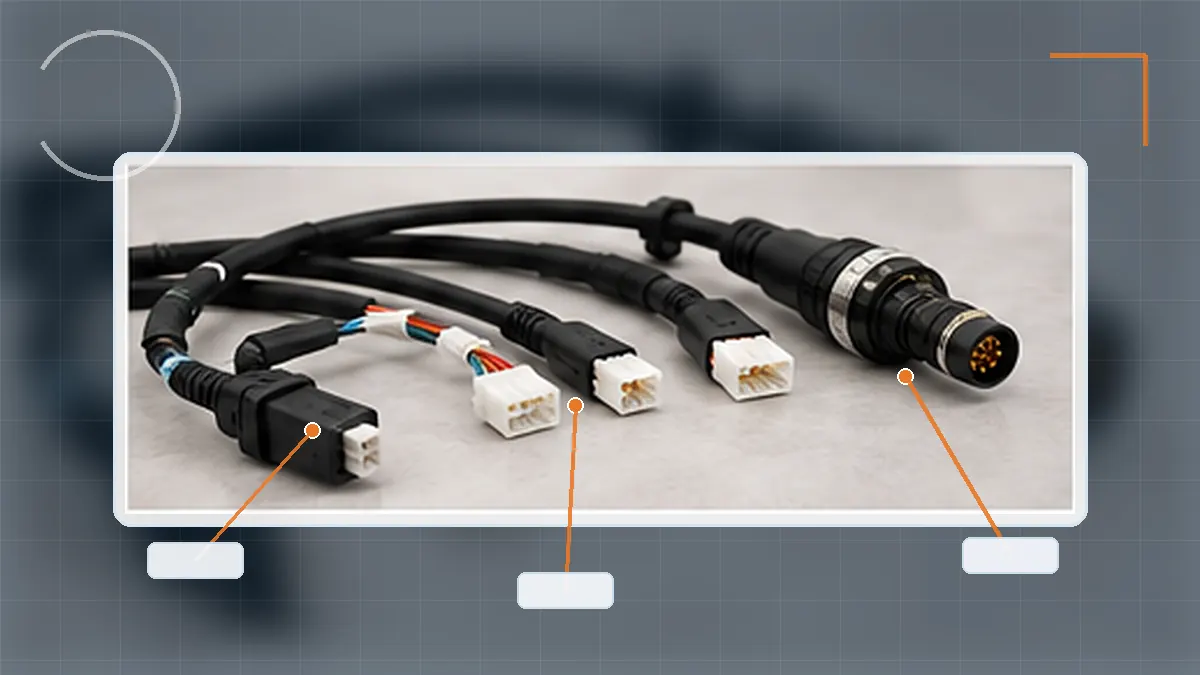
Specification priority: define the operating condition, interface, cable construction, mechanical limits, test plan, and required documents before requesting a production quote.
Start With the Application Boundary, Not the Catalog Page
A catalog connector can be a valid starting point, but its listed attributes do not describe the complete cable assembly. The connector body, contact termination, cable jacket, shield treatment, backshell, overmold, and strain-relief geometry interact. A change in one element can shift bending stress, alter routing, or make the assembly difficult to inspect.
The first engineering judgment is therefore simple: separate the requirements that belong to the connector from those that belong to the finished assembly. Connector mating information should come from the approved drawing or part documentation. Cable routing, flex behavior, pull direction, installation space, labeling, and end-of-line tests should be defined at assembly level.
Failure clues point to interfaces, not just components
| Observed risk | Interface to review | Evidence to request |
|---|---|---|
| Intermittent continuity during movement | Conductor termination, cable exit, and strain-relief transition | Section drawing, termination method, sample test plan, and flex condition |
| Noise or unstable signal behavior | Shield construction, shield termination, grounding path, and connector transition | Pin map, shield treatment, grounding requirement, and project-specific signal review |
| Moisture or contamination concern | Mating seal, cable entry, backshell, and overmold boundary | Application exposure, interface drawing, material requirement, and agreed verification method |
| Connector loosening or housing damage | Coupling method, retention feature, installation force, and cable loading direction | Mating procedure, routing drawing, mechanical constraint, and inspection criteria |
Do not label an assembly “harsh environment” and expect the supplier to infer the test scope. State the actual exposure and how the cable is installed. A fixed indoor cable, a repeatedly moved harness, and an outdoor assembly may use similar connector families while requiring different construction decisions.
When the interface itself is not settled, the Custom Connectors page provides the relevant path for discussing a modified or project-specific connector rather than forcing an unsuitable catalog choice.
Build the RFQ Specification in Six Layers
A useful RFQ lets the supplier identify missing inputs before quoting. It should also let the buyer compare offers on the same basis. The following layers keep technical, quality, and commercial decisions connected without turning the request into a long but unusable checklist.
| RFQ layer | What to provide | Procurement check |
|---|---|---|
| 1. Function | Power, signal, data, control, grounding, or a mixed requirement; identify critical circuits in the pin map. | Confirm the quote is based on the same circuit assignment and not a generic cable description. |
| 2. Interface | Connector series or approved interface drawing, mating side, keying, pinout, and orientation. | Ask which dimensions and mating details will be checked before tooling or sampling. |
| 3. Cable construction | Conductor count, wire gauge, shielding, jacket requirement, color, length, and tolerances from approved project documents. | Require the supplier to identify any substituted material or unavailable component before approval. |
| 4. Mechanical use | Routing envelope, minimum space near the cable exit, bend direction, pull load, movement, and installation method. | Check whether the proposed backshell or overmold conflicts with enclosure access or service procedures. |
| 5. Environment and compliance | Temperature condition, moisture, dust, chemicals, UV, vibration, and any project or market requirement that must be confirmed. | Do not accept a broad compliance statement; request the applicable document, test method, and scope. |
| 6. Acceptance package | Electrical tests, dimensional checks, visual criteria, labeling, traceability, sample quantity, and required reports. | Make the acceptance criteria part of the quotation and drawing approval, not a late purchasing note. |
Review the Assembly Before the First Sample
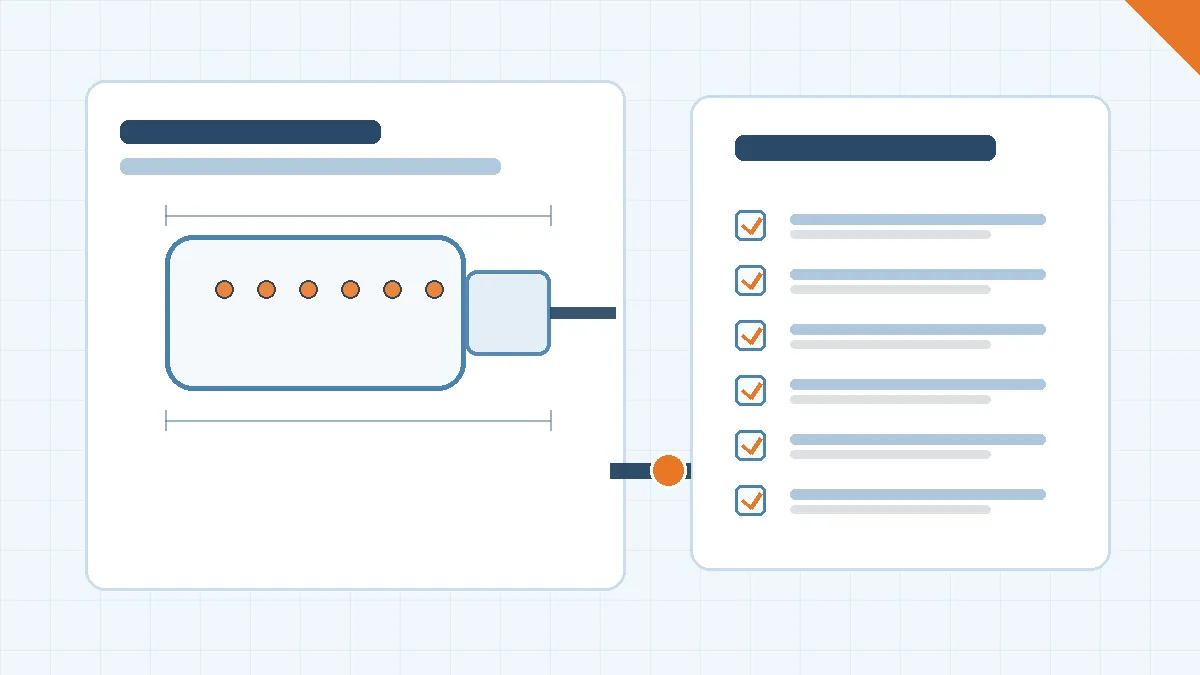
A sample should confirm an agreed design; it should not be the first time the supplier sees the installation constraints. Before sample build, compare the connector orientation, cable exit direction, routing envelope, label position, and mating access against the customer drawing or 3D model. Any unresolved dimension should be marked for confirmation rather than filled with an assumption.
Use analysis only where the project needs it
Current company materials describe engineering support that may include Pro-E modeling, Moldflow analysis, ABAQUS terminal stress analysis, and signal-integrity simulation. These are project-dependent tools, not automatic steps for every cable. The practical question is which uncertainty the analysis is meant to reduce: mechanical fit, molded-part behavior, terminal stress, or signal transition.
Engineering checkpoint: ask the supplier to state the input data, output reviewed, and decision tied to any simulation or analysis. A software name alone is not acceptance evidence.
Set test limits from approved project requirements
Continuity, dielectric withstand, insulation resistance, dimensional inspection, environmental screening, or signal-related checks may be relevant, but the required method and pass/fail limit depend on the design and end application. Where a value is not supported by the uploaded project evidence, it should remain a confirmation item in the RFQ and drawing review.
Specialized testing can also require an external qualified laboratory. The buyer should confirm who performs the test, which sample configuration is used, whether the report is tied to the production design, and whether the cost and lead time are included in the quotation.
Evaluate Supplier Control, Not Just the Equipment List
The available LinkManu project facts support manufacturing capabilities that include assembly, injection molding, stamping, and tooling. That capability range can be useful when a project needs a custom transition, overmold, contact, or housing element, but the actual process route still depends on the approved design and RFQ scope.
Use the Custom Cable Assemblies & Wire Harnesses Manufacturer page as the product-family reference. During supplier review, confirm which operations apply to your specific part, which items are purchased, which inspections occur before shipment, and which records can be supplied with the lot.
Questions that expose gaps before purchase order release
- Who owns the final drawing, pin map, and revision approval?
- Which connector, cable, terminal, seal, or molding inputs are customer-specified and which are supplier-proposed?
- What changes require written approval after the sample is accepted?
- Which tests are performed on every assembly, by lot, on first article, or only when requested?
- Which dimensions and visual criteria will appear in the first-article or inspection record?
- How are labels, serialization, packaging, and revision traceability controlled?
A supplier that can answer these questions clearly is easier to compare than one that only provides a capability brochure. The decision should be based on design control, process ownership, evidence, and change management—not on the number of machines listed.
Common Specification Mistakes and Practical Fixes
Sending only a connector part number
A part number does not define cable routing, termination, shield treatment, length tolerance, or acceptance tests. Add an assembly drawing and pin map, then identify any information that the supplier must propose.
Using broad terms such as waterproof or high vibration
Broad labels cannot be quoted or tested consistently. Describe the exposure, installation, movement, and required evidence. Leave the exact rating as a confirmation item unless the approved project document provides it.
Locking the bill of materials before checking space and service access
A connector may mate correctly but leave no room for the cable exit, latch access, or tool clearance. Review the mated envelope and cable path before sample release.
Adding documentation requirements after pricing
First-article data, inspection records, external test reports, serialization, and special packaging can affect cost and lead time. Include them in the RFQ so competing quotations cover the same deliverables.
Accepting substitutions without a change rule
A substitute can affect fit, termination, material behavior, or availability. Define which components are frozen, which may be proposed as alternatives, and what evidence is required before approval.
Next Step: Prepare a Reviewable Drawing Package
Before requesting samples, confirm the interface drawing, pin map, cable specification, length and tolerances, routing envelope, mating orientation, operating environment, current and voltage requirements, shielding treatment, test criteria, documentation, and supplier process scope. Mark unknown values as open questions instead of guessing.
For a project-specific review, use the Get Engineering Review page to share the drawing, BOM, application description, and required evidence. The goal of the first review is to identify missing decisions and agree on what the sample must prove.
FAQ
What should be included in a cable assembly RFQ?
Include the drawing, pin map, connector interface, cable construction, length and tolerances, routing conditions, environment, tests, labeling, documentation, and sample requirements.
Can a supplier quote from a connector part number alone?
It may support a budgetary discussion, but it does not define the finished assembly. A production quote should be tied to assembly-level requirements.
Which tests should be specified?
Choose tests that match the electrical function, environment, and customer acceptance plan. Confirm the method, limits, sample configuration, and report requirement.
When is custom tooling worth reviewing?
Review it when the interface, routing, retention, overmold, or space constraint cannot be met reliably with the approved standard construction.
Send Your Connector Requirement
Share your drawing, BOM, cable specification, application conditions, and test or documentation needs. LinkManu can review RFQ completeness, sample inputs, and open engineering questions before selection.

Technical content reviewed by LinkManu Engineering Team
Prepared by LinkManu Editorial Team for B2B connector engineers, sourcing teams, and product development projects.