Automotive Connector Lead Time
Lead Time for Automotive Wiring Harness: What Buyers Should Confirm
Lead time for automotive wiring harness projects is often shaped less by the wire itself and more by connector decisions made before production begins. Housing design, sealing expectations, terminal selection, tooling status, sample review, and documentation readiness can all change the schedule. For buyers, the practical question is not only “when can parts ship?” but “which requirements must be confirmed before a supplier can give a reliable timeline?”
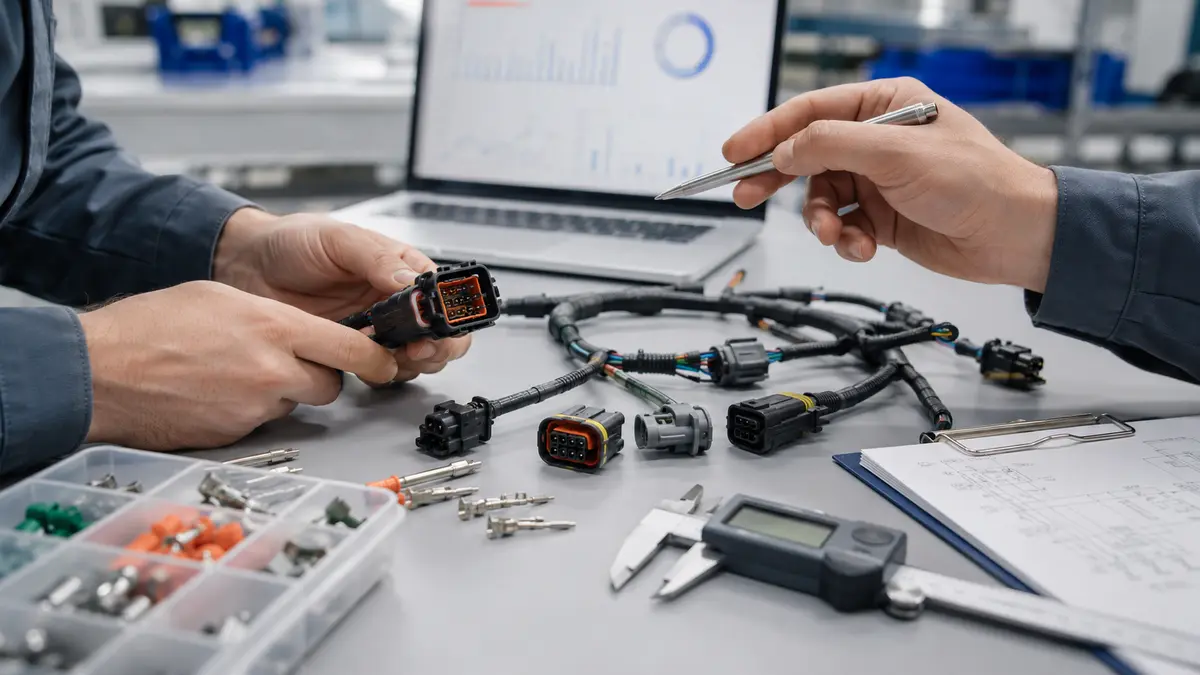
This article reviews the engineering and sourcing checkpoints that help buyers reduce uncertainty in automotive connector assembly schedules. It focuses on what to confirm, what to avoid assuming, and how to prepare a clearer RFQ package for manufacturing review.
Why Connector Decisions Stretch Harness Lead Time
Connector Complexity Comes Before Production
A wiring harness is an organized network of wires, terminals, connectors, insulation, protection, and routing features that carries power and signals through a vehicle. In practical terms, the connector is the interface where the harness meets modules, sensors, lamps, controls, and other electrical systems. When that interface is not fully defined, the whole harness schedule becomes harder to quote.
Multi-cavity housings, sealed interfaces, secondary locks, terminal retention features, keying options, and mating connector availability can create dependencies before assembly begins. A supplier may need to review drawings, confirm the mating side, check terminal compatibility, evaluate tooling, and verify whether the required materials are already approved for the target application. If any of these items is unclear, the lead time for automotive wiring harness sourcing becomes a moving target rather than a firm schedule.
Buyer takeaway: Do not treat the connector as a simple line item. Confirm the connector family, mating interface, terminal system, sealing expectation, and documentation needs before asking for final lead time.
Common Sources of Schedule Drift
- Drawing gaps: The harness drawing may show cavity labels, but not the full connector part structure, terminal choice, seal type, or mating requirements.
- Material uncertainty: Automotive projects may require customer-approved housing materials, seals, plating, or color/keying rules that cannot be substituted casually.
- Tooling assumptions: If a housing, insert, or terminal path needs tooling review, the schedule depends on engineering confirmation, sampling, and first-article feedback.
- Documentation delay: PPAP-related records, material traceability, drawing revisions, and inspection reports can delay approval even when physical samples look acceptable.
- Service and repair requirements: If connectors must be disconnected, depinned, or reworked in service, the extraction method and replacement part availability should be confirmed early.
Engineering Requirements Buyers Should Confirm First
Many blocking issues in the draft came from treating specific technical values as universal facts. For a publish-ready article, those values are better handled as engineering questions. Buyers should ask suppliers to confirm the actual requirement for their vehicle zone, customer specification, and mating system.
| Requirement Area | What the Buyer Should Confirm | Why It Affects Lead Time |
|---|---|---|
| Operating environment | Temperature class, chemical exposure, moisture, dust, road spray, and mounting location | Material and sealing decisions may change housing, seal, terminal, and validation paths. |
| Connector architecture | Cavity arrangement, keying, secondary locks, mating side, and mounting method | Undefined architecture can require new sample review or tooling confirmation. |
| Electrical path | Power circuits, signal circuits, terminal system, plating expectation, and wire range | Terminal and crimp decisions affect tooling, inspection, and approval timing. |
| Mechanical durability | Vibration exposure, retention expectations, latch protection, and harness strain relief | Higher mechanical risk often requires more careful sample and test review. |
| Approval package | Drawing revision, inspection plan, material traceability, and customer-required submission documents | Missing documentation can hold release even after parts are physically available. |
Serviceability Also Belongs in the RFQ
Search questions such as how to disconnect automotive electrical connectors, how to remove automotive electrical connectors, and how to remove wire from push in connector automotive often appear after a project is already in service. For sourcing, they should be asked earlier. The buyer should confirm the lock type, secondary lock sequence, extraction tool requirement, replacement terminal availability, and post-service inspection method. These details can influence connector selection, assembly training, and rework time.
For a buyer asking what is a wiring harness on a car, what is a wire harness in a car, or what is a wiring harness for a car, the short answer is this: it is the vehicle’s routed electrical connection system. The more specific answer is that the harness is only as reliable as its connector interfaces, strain relief, protection, and documentation. That is why connector confirmation belongs at the beginning of lead-time planning.
How Manufacturing Capability Changes the Timeline
A supplier’s capability map matters because every outsourced step adds another scheduling dependency. Based on the approved source facts in this article package, LinkManu’s available manufacturing capabilities include tooling, injection molding, stamping, and assembly. Those capabilities support an earlier engineering review of connector design, sample path, and production readiness.
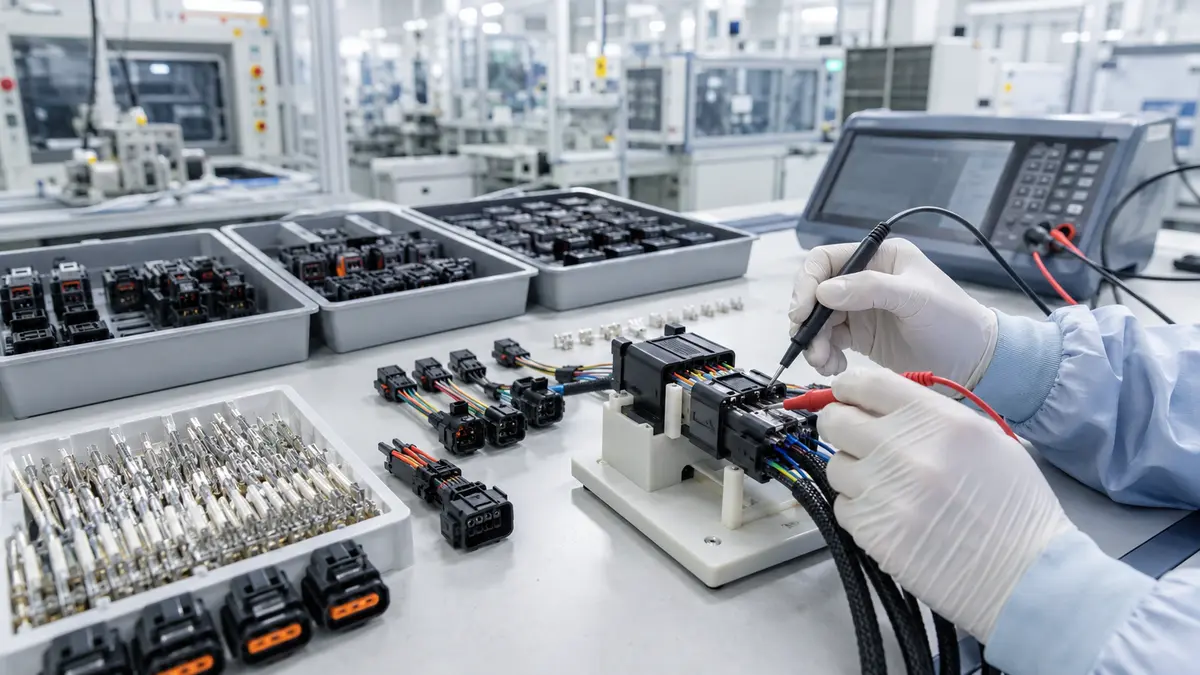
Integrated review does not remove the need for validation. It can, however, make discussions more direct. Tooling feedback, molded housing evaluation, terminal stamping review, and assembly checks can be aligned earlier instead of being handled as separate late-stage issues.
Supplier Qualification Questions
- Can the supplier review drawings, BOM, sample photos, and mating connector information before quoting final lead time?
- Which parts of the project require tooling, injection molding, stamping, or assembly review?
- Are IATF 16949 or ISO 14001 certificate references required by the customer, and what scope should be checked?
- What inspection records, material records, and sample reports will be included with the first review package?
- Which requirements are firm, and which are still engineering assumptions that could change the schedule?
For automotive connector programs, buyers can also review the broader application context through Automotive Electronics Connector Solutions. Keeping the industry page, product selection, and engineering review connected helps prevent the RFQ from becoming a disconnected price request.
Documentation That Prevents Approval Delays
Lead time is not finished when samples are produced. Buyers also need to confirm whether the project requires dimensional reports, material traceability, inspection records, process flow information, control plan support, or customer-specific submission documents. If the documentation list is only discovered after samples arrive, the approval clock may restart.
Practical rule: Send the drawing revision, BOM, target vehicle zone, mating connector information, environmental expectations, and required approval documents in the first RFQ package. This gives the supplier a better chance to quote a realistic timeline.
High-Risk Assumptions to Avoid
- Assuming a similar-looking connector is automatically acceptable for the same harness location.
- Changing terminal, plating, seal, color, or keying requirements after tooling or sampling has started.
- Quoting lead time before the mating connector and harness routing constraints are known.
- Treating customer approval documents as paperwork that can be completed after production planning.
- Skipping serviceability review when the connector may need to be disconnected or repaired in the field.
If your team needs help turning a drawing, BOM, or early connector concept into a clearer sourcing package, LinkManu can support engineering review through Custom Connector Support and related Engineering & Quality workflows. Buyers comparing product families can also start from Browse Related Products or use Contact LinkManu for a technical discussion.
Frequently Asked Questions
How many hours does it take to install a wiring harness?
Installation time depends on vehicle layout, routing complexity, module access, and assembly process. For procurement teams, the more important timing issue is usually connector availability and approval readiness, because one unresolved connector decision can hold the full harness package.
How long does it take to replace a wiring harness?
Replacement time varies by vehicle structure and harness location. A deeply routed harness may require more disassembly than a service-accessible sub-harness. During sourcing, buyers should confirm connector serviceability, replacement part availability, and terminal removal requirements before the design is locked.
Which connector is commonly used in automotive wiring?
There is no single connector that fits every automotive wiring application. The suitable connector depends on the vehicle zone, sealing requirement, vibration exposure, current path, mating interface, and customer approval rules. Buyers should define the application first, then confirm the connector architecture with the supplier.
What should buyers confirm before requesting lead time for automotive wiring harness projects?
Send the drawing, BOM, mating connector details, target application, environmental requirements, sample expectations, and approval-document list. The more complete the RFQ package is, the easier it is for the supplier to identify tooling, material, validation, and documentation risks early.
Send Your Connector Requirement
Share your drawing, BOM, target application, mating connector details, or technical requirements. LinkManu can review connector fit, sample options, documentation needs, and RFQ readiness before final selection.

Technical content reviewed by LinkManu Engineering Team
Prepared by LinkManu Editorial Team for B2B connector engineers, sourcing teams, and product development projects. Updated 2026.