
Custom Connector Engineering
Custom Connector Design Firm: Specifications to Review Before RFQ
Choosing a custom connector design firm starts with more than asking whether a supplier can manufacture a new connector. The useful question is whether the firm can turn your drawing, sample, mating requirement, electrical targets, operating environment, and production needs into a specification that can be reviewed, tested, and quoted.
A strong RFQ package helps engineering and procurement compare suppliers on the same basis. It also exposes missing information before tooling, samples, or production commitments begin. This guide explains which inputs to prepare, what the supplier should review, and which questions should remain open until evidence is available.
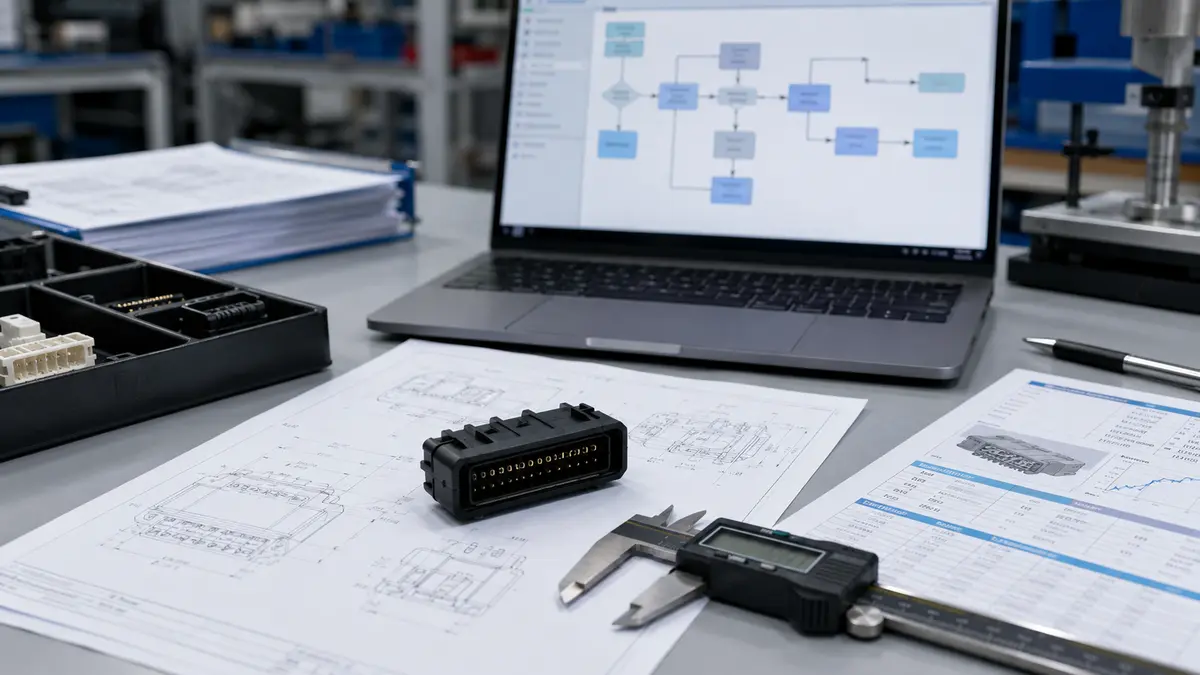
Engineering judgment: separate confirmed requirements from targets that still need supplier review or testing. An unverified value should remain an open engineering question, not become a product claim or purchasing requirement.
What a Custom Connector Design Firm Should Review
A custom connector project may begin with a released drawing, a rough sketch, an existing part number, a sample, a PCB layout, or an application problem. The design firm should identify which inputs control the mating interface, manufacturability, performance review, inspection plan, and quotation.
For projects tied to Custom Connectors & Interconnect Solutions, the review should cover the physical connector and the production path. That includes the housing and contact structure, mating direction, mounting method, material and finish requirements, tooling needs, assembly method, inspection points, expected quantity, and validation requirements.
The supplier should also state the limits of the review. A drawing may define dimensions but not prove current-carrying performance. A sample may reveal the interface but not the material grade. An existing part number may provide a reference, but compatibility still requires dimensional, electrical, mechanical, and application checks.
Specifications to Prepare Before Requesting a Quote
The first RFQ does not need every final production value, but it should contain enough information to identify the connector type, project scope, major risks, and missing decisions.
| Requirement area | Information to provide | What the design firm should confirm |
|---|---|---|
| Reference files | 2D drawing, 3D file, PCB layout, datasheet, sample photos, or existing part number | Which file and revision control the review, and which dimensions remain uncertain |
| Connector interface | Pitch, pin count, row count, mating direction, keying, stack height, and mounting style | Whether the interface is new, based on an existing mating part, or dependent on a customer sample |
| Electrical targets | Signal or power use, target current and voltage, grounding, shielding, and mixed power-signal needs | Which targets require engineering calculation, prototype evaluation, or test evidence |
| Mechanical conditions | Available space, insertion direction, retention needs, vibration, handling, and mating-cycle expectations | Which housing, contact, locking, or strain-relief features should be reviewed |
| Operating environment | Temperature, moisture, dust, chemical exposure, outdoor use, and installation constraints | Which material, sealing, plating, or validation questions apply to the actual assembly |
| Production context | Prototype quantity, expected annual volume, target timing, assembly method, and packaging needs | Whether tooling, stamping, molding, assembly, or a modified standard platform is appropriate |
| Quality documentation | Inspection reports, test requirements, material documents, certification references, and change-control needs | Which records are available, project-specific, or dependent on an agreed validation plan |
Use this list as an RFQ checklist rather than a promise that every field is already fixed. When a value is not confirmed, label it as a target or open question and state who is responsible for approving it.
How to Evaluate Engineering and Manufacturing Capability
A design proposal is useful only if it can be manufactured consistently. Ask how the firm connects connector design decisions with tooling, stamping, injection molding, assembly, and inspection. The answer should identify the process owner, the evidence used during review, and the stage at which the customer approves the result.
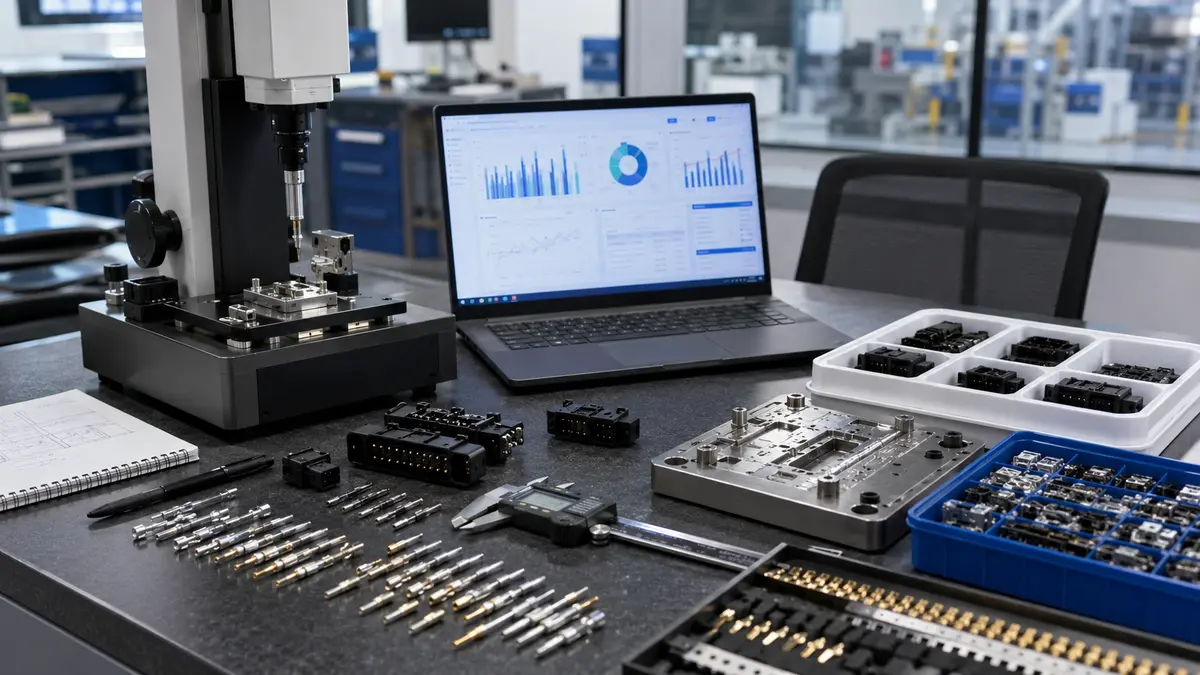
Tooling and structure review
Confirm whether the project needs a new mold or die, a modification to an existing platform, or only a change in pin count, mounting configuration, material, or finish. Ask which dimensions are controlled by tooling and how design changes will be documented.
Contact and housing review
The firm should review the relationship between contact geometry, housing structure, mating interface, materials, plating, assembly method, and application loads. Exact performance values should remain subject to the agreed design and validation evidence.
Prototype and validation planning
Before production, agree on what the sample is intended to prove. Fit checks, mating checks, dimensional inspection, mechanical tests, electrical tests, and environmental evaluation answer different questions. The RFQ should state which checks are required and what constitutes approval.
Certification information such as IATF 16949 or ISO 14001 may help evaluate the supplier’s documented systems, but certification alone does not approve a connector for a specific application. Review the project drawing, process plan, inspection records, test scope, and change controls together.
Questions to Ask a Custom Connector Design Firm
- Which drawing, sample, mating part, or existing part number will control the design review?
- Which requirements are confirmed, and which still need engineering evidence or customer approval?
- Can an existing connector platform be adapted, or does the project require new tooling?
- Which processes are performed or controlled by the supplier: tooling, stamping, molding, plating, assembly, and inspection?
- What prototype stages are available, and what will each sample stage verify?
- Which dimensional, mechanical, electrical, and environmental checks are proposed?
- How are drawing revisions, deviations, and engineering changes recorded and approved?
- What information is needed to quote tooling, samples, unit pricing, and production timing?
- Which documents will be supplied before sample approval and production release?
Specific answers are more useful than broad claims. If a supplier cannot yet confirm a requirement, the response should identify the missing input, proposed review method, and next decision rather than filling the gap with an unsupported value.
Custom Connector RFQ Review Process
- Submit the available evidence. Share drawings, 3D files, datasheets, samples, photos, PCB information, existing part numbers, and application notes.
- Separate fixed requirements from open questions. Mark customer-controlled interfaces, target values, preferred features, and items requiring supplier review.
- Review design and manufacturing feasibility. Evaluate connector structure, materials, mating, tooling, stamping, molding, assembly, and inspection needs.
- Define the sample and validation plan. Agree on what each prototype stage must demonstrate and which records will support approval.
- Confirm commercial scope. Align tooling, sample quantity, estimated volume, timing, packaging, documentation, and change-control expectations.
- Release only approved information. Keep drawing revisions, deviations, test results, and production approvals traceable throughout the project.
Where LinkManu Fits
LinkManu supports custom connector design review and RFQ communication based on drawings, samples, datasheets, BOM information, existing part numbers, and application requirements. The review can cover connector structure, mating interface, manufacturability questions, inspection workflow, testing references, and the information needed for quotation.
To evaluate the broader process, review LinkManu’s Engineering & Quality information and the related guide on how to choose a custom connector design firm. You can also browse the connector product categories when a standard or modified connector platform may fit the project.
Prepare Your Custom Connector RFQ
Start with the information already available: drawing revision, mating interface, pitch and contact layout, electrical targets, operating environment, sample photos, expected quantity, validation needs, and required documents. Mark missing details as open. A focused engineering review can then determine what should be confirmed before tooling, samples, quotation, or production release.
FAQ
What should I send to a custom connector design firm?
Send the latest drawing or sketch, 3D file when available, PCB or mating information, datasheet, sample photos, existing part number, target application, expected quantity, and known electrical, mechanical, environmental, and documentation requirements.
Can a connector be developed from a sample or existing part?
A sample or existing part can support the initial review, but the mating interface, critical dimensions, materials, electrical requirements, application conditions, and validation scope still need confirmation.
When is new tooling required?
New tooling may be required when the housing, contact, interface, material, or production method cannot be supported by an existing platform. The decision should follow design and manufacturing feasibility review.
What should be confirmed before production release?
Confirm the approved drawing revision, mating and application requirements, materials and finishes, inspection and test results, accepted deviations, packaging requirements, and change-control responsibilities.
Send Your Connector Requirement
Share your drawing, BOM, target application, sample information, existing part number, expected quantity, or validation requirements. LinkManu can review connector fit, manufacturing questions, and RFQ readiness.

Technical content reviewed by LinkManu Engineering Team
Prepared by LinkManu Editorial Team for B2B connector engineers, sourcing teams, and product development projects. Updated 2026.