
Power Connector RFQ Guide
Barrel Connector Sizes: RFQ Checklist for Power Connector Projects
Barrel connector sizes look simple on a drawing, but a small mismatch between the plug and jack can still cause unstable power, loose retention, or a late enclosure change. Engineering and purchasing teams should treat the barrel interface as a controlled power connector system, not as a catalogue label. The practical goal is to confirm the mating plug, jack, mounting style, material expectations, inspection method, and supplier process before the connector enters the BOM.
For projects that need power input review, LinkManu’s Power Connectors for DC and High-Current Interface Projects page is the right starting point. This article focuses on how to prepare a useful RFQ package for barrel connector sizes without turning unsupported catalogue values into design claims.
Why Barrel Connector Sizes Cause Field Problems
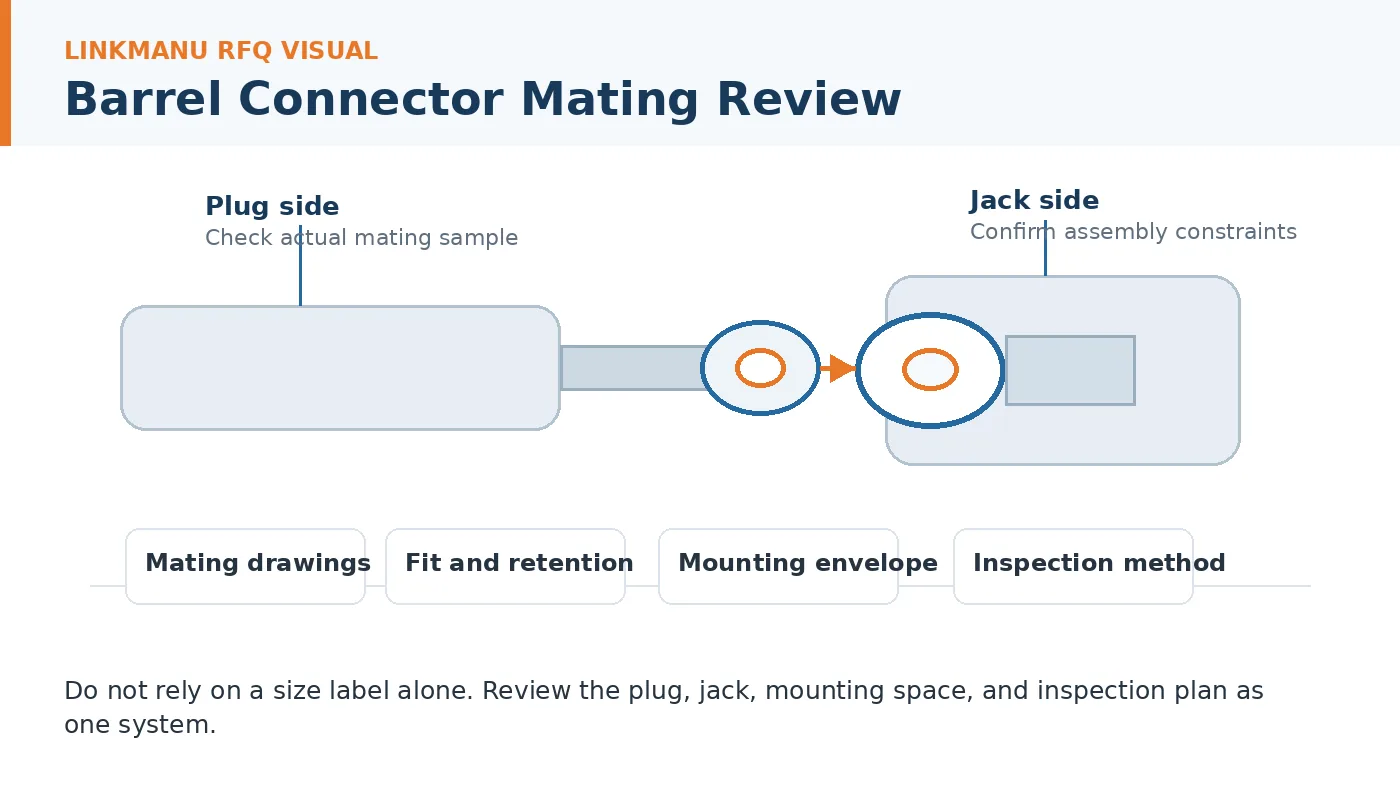
A barrel connector has several interacting details: the outer sleeve, the inner contact, plug depth, contact spring geometry, and the panel or PCB mounting envelope. If one side of the mating pair is chosen from a loose description, the design may pass a bench power-on test but fail during cable movement, repeated handling, or temperature change. Typical field symptoms include random resets, noisy power input, weak retention, or customer complaints that the adapter feels right but does not power the device consistently.
The risk grows when procurement substitutes a visually similar plug or jack without checking the actual mating drawing. Two parts can look nearly identical in a photo yet differ in contact fit, barrel depth, plating system, or spring design. For that reason, barrel connector sizes should be validated as a mating pair before sample approval, especially when an enclosure, cable assembly, or adapter supply is already fixed.
What to Confirm Before Selecting a Size
Start with the application requirement, then work toward the physical interface. A clean connector specification should explain the operating environment, expected handling, mounting constraints, and inspection method. A supplier should not have to infer these details from a short phrase such as “standard barrel connector.”
| RFQ Item | What the Engineering Team Should Provide |
|---|---|
| Mating interface | Plug and jack drawings, sample photos, and the measurement reference points used by the current design. |
| Mounting style | PCB mount, panel mount, cable end, or custom overmolded assembly, plus space limits around the connector. |
| Electrical use | Continuous load profile, surge conditions, polarity requirement, and derating assumptions stated as project requirements. |
| Mechanical use | Cable movement, expected handling, retention target, panel thickness, and whether blind mating is involved. |
| Material expectations | Housing material preference, flame-retardant requirement, plating preference, and environmental exposure that need supplier confirmation. |
| Inspection plan | Incoming inspection method, sample approval criteria, and the dimensions that must be measured on production lots. |
This information lets the supplier recommend a connector family and tolerance plan rather than simply matching a size label. It also gives purchasing a fair basis for comparing quotes, because each supplier must answer the same fit, retention, inspection, and sample approval questions.
Common Selection Mistakes
The first mistake is relying on nominal descriptions instead of controlled drawings. Barrel connector labels often omit tolerance, depth, spring contact design, and measurement method. A size that sounds familiar may still be wrong for the selected adapter, enclosure, or PCB layout.
The second mistake is treating every similar round connector as suitable for power input. Some connector styles can look close to non-specialists, but the mating behavior and contact sequence may be different. A power input should be reviewed against the target load, polarity, handling pattern, and safety requirements before it is accepted.
The third mistake is ignoring production inspection. A first sample can fit well while later lots drift because tooling wear, plating variation, or contact spring variation was not monitored. For a production device, the RFQ should ask how the supplier controls dimensional consistency across tooling cavities and assembly batches.
How to Evaluate Supplier Capability
A barrel connector RFQ should ask about process control, not just unit price. Useful supplier evidence includes dimensional inspection capability, tooling maintenance discipline, contact material traceability, plating control, and a sample validation plan. If a custom barrel connector size is required, the supplier should explain how tooling, molding, terminal forming, and final assembly will be reviewed before mass production.
Integrated manufacturing can reduce back-and-forth because design feedback moves between tooling, molding, stamping, and assembly teams more quickly. For power-path design, it also helps when the supplier understands contact geometry and current path reliability. The related article How to Choose the Right Power Contacts for Your Connector Application explains why contact design and mechanical fit should be reviewed together.
Procurement check: if two suppliers quote the same nominal size but only one can describe measurement points, tolerance control, and sample inspection, the lower unit price may not reflect the real project risk.
Inspection and Sample Approval Plan
A strong sample approval plan makes the size decision traceable. Ask the supplier to identify which dimensions will be measured on incoming samples, which gauges or optical methods will be used, and how results will be recorded for later production comparison. The approval plan should include fit checks with the actual mating plug and jack, retention review after repeated handling, and inspection of solder or cable termination quality.
If the connector mounts to a panel, include the panel thickness, washer or nut stack, and enclosure material in the review. These details affect how the barrel sits under load and whether assembly workers can tighten or align it consistently. For a PCB mount design, check whether connector stress can transfer into solder joints during cable movement or service access.
For custom or modified barrel connector sizes, request a short design review before tooling release. The review should cover terminal forming risk, molding shrinkage, plating coverage, assembly sequence, and how the supplier will prevent mixed parts during production. This does not require publishing proprietary process data in the RFQ. It gives both sides a shared checklist before samples are approved.
Barrel Connector Sizes RFQ Checklist
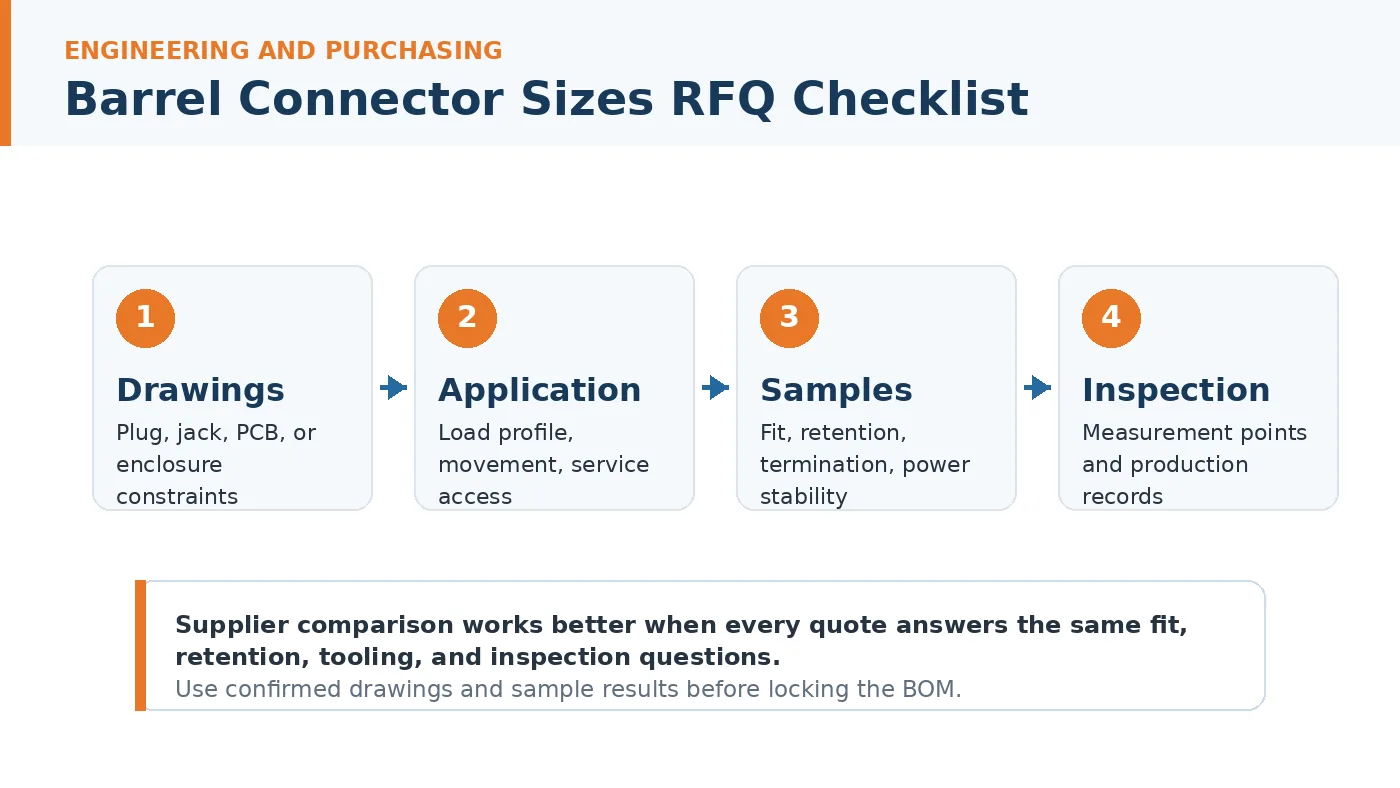
Use this checklist before sending the project to quotation:
- Confirm the mating plug and jack drawings are both available.
- State the measurement reference points used for the barrel and contact interface.
- Provide the target mounting style and available mechanical envelope.
- Describe cable movement, vibration exposure, insertion handling, and service access.
- List electrical load requirements as project requirements, not as unsupported connector ratings.
- Ask the supplier to confirm tolerance control and production inspection method.
- Request samples for fit, retention, power stability, and assembly review before locking the BOM.
- Keep catalogue size labels secondary to verified mating performance.
During supplier comparison, keep the RFQ language consistent across vendors. Ask each supplier to answer the same fit, retention, inspection, tooling, and sample approval questions. Comparable answers make it easier to separate a mature production plan from a low-price quote that leaves key engineering risks unresolved.
Frequently Asked Questions
Are barrel connector sizes universal?
No. Size labels are useful search terms, but they do not replace mating drawings, tolerance review, and sample validation. Treat the plug and jack as a pair.
Can I choose a barrel connector from a photo?
No. A photo cannot confirm contact fit, spring design, plug depth, or tolerance. Use drawings, samples, and measured inspection data.
What should I send with a barrel connector RFQ?
Send the mating connector drawing, enclosure or PCB constraints, load profile, material expectations, inspection requirements, and sample validation plan.
Send Your Connector Requirement
Share your drawing, BOM, target application, or technical requirements. LinkManu can review connector fit, sample options, documentation needs, and RFQ readiness before final selection.

This article is prepared for engineering and sourcing teams that need connector selection checks before sample approval or production quotation.