
High-Speed Connector Engineering Guide
Two Types of RF Connectors: SFF Committee Specification RFQ Review
For projects described by the search phrase two types of RF connectors SFF committee specification, the useful engineering split is not a claim that an SFF document defines two universal connector families. For RFQ review, it is safer to separate the interface by integration role: a board-fixed interface and a cable-terminated interface. That distinction changes what must be checked on the drawing, what evidence the supplier should provide, and which assembly risks belong to the PCB side or cable side.
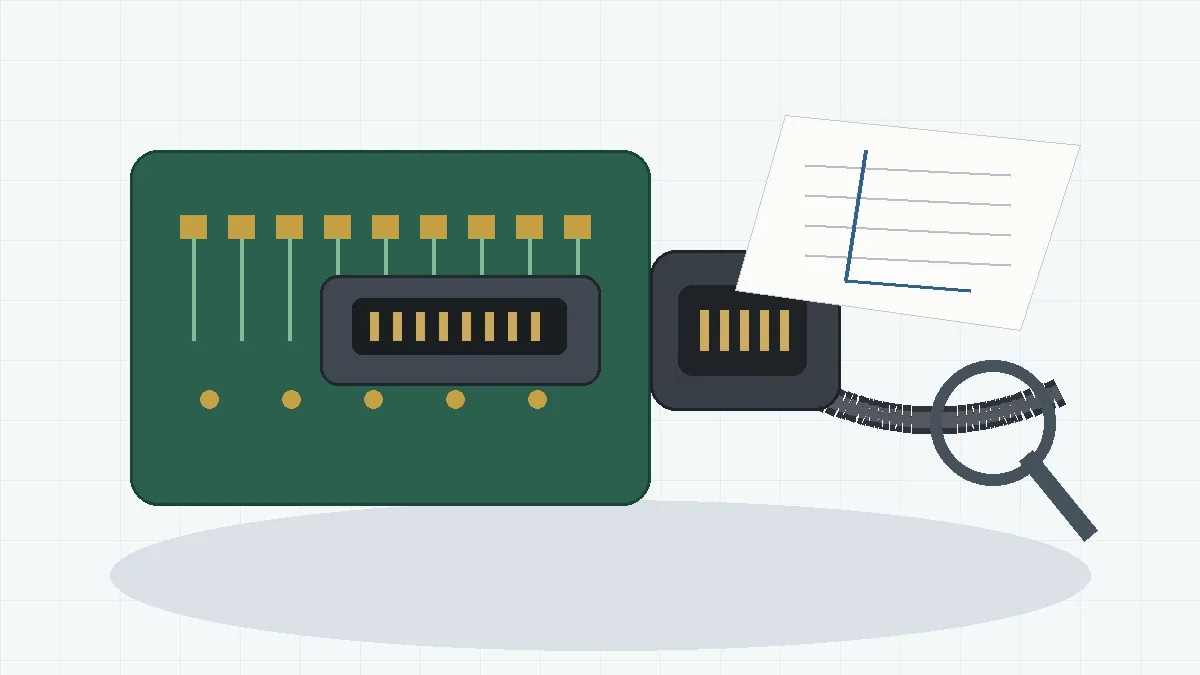
Scope note: board-fixed and cable-terminated are RFQ review roles used in this article, not formal SFF type names. The exact SFF document, revision, and interface requirement should be confirmed from the customer package before comparing supplier parts.
Start With the Referenced SFF Document, Not the Part Number
A supplier part number can be useful for identification, but it is not enough to establish interchangeability. The first review step is to identify the SFF document and revision named in the customer drawing, BOM, datasheet, or qualification record. If the package only says “SFF” without a document number, revision, or interface role, the requirement is still incomplete.
SFF documentation can define an interface envelope, application context, mechanical intent, and performance requirements, while internal construction can remain supplier-specific. That means two parts can appear similar at the mating face yet differ in PCB attachment, cable entry, retention, termination, dielectric path, or grounding path. Treat the interface reference as a boundary condition for the RFQ, not as proof that any visually similar part is equivalent.
What procurement should confirm before supplier comparison
- The exact SFF document and revision referenced by the customer package.
- Whether the required interface is board-fixed, cable-terminated, or a complete mated pair.
- Which drawing dimensions and retention features are interface-control points rather than supplier preferences.
- Which electrical and mechanical results must be demonstrated during qualification.
- Whether the sourcing request is for a compatible alternative or a redesigned connector; neither should be assumed from appearance alone.
Two RFQ Roles: Board-Fixed and Cable-Terminated
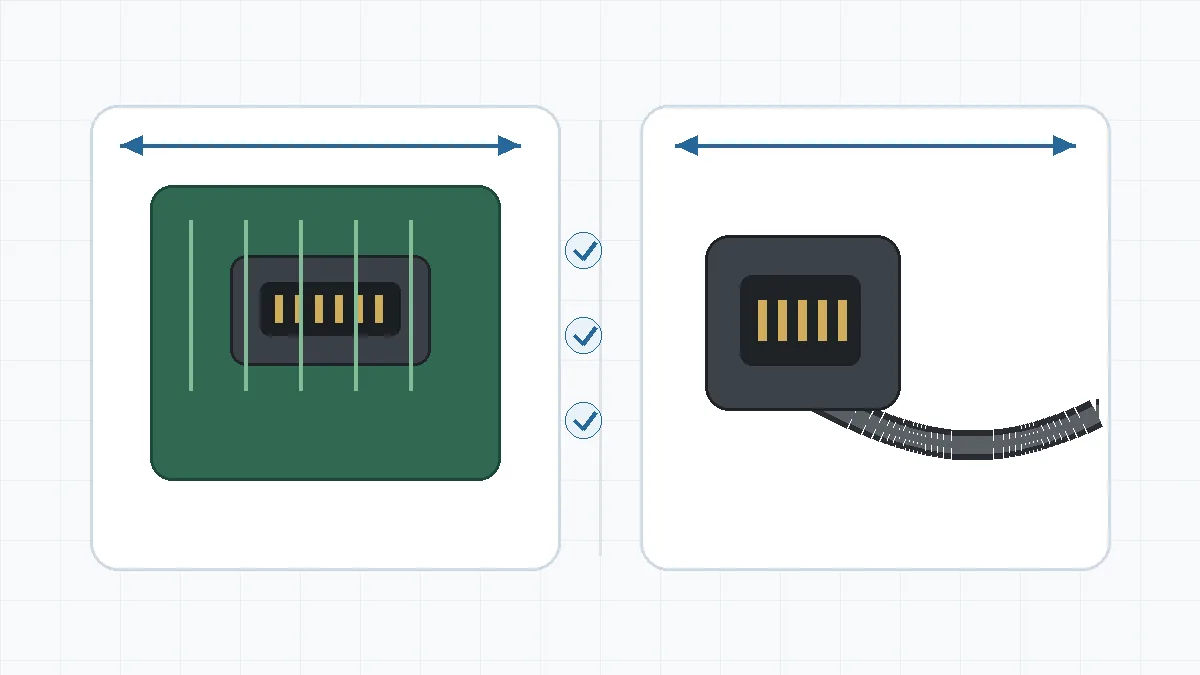
The board-fixed versus cable-terminated split is practical because each side carries different evidence requirements. A board-side review centers on the PCB and assembly process. A cable-side review centers on cable preparation, shield termination, retention, and strain relief. Using one generic connector checklist for both can hide the very differences that later force drawing changes or requalification.
| Review Dimension | Board-Fixed Interface | Cable-Terminated Interface |
|---|---|---|
| Integration point | PCB land pattern, connector seating, solder joints, and board retention | Cable entry, shield termination, jacket retention, and strain relief |
| Primary documents | PCB drawing, connector drawing, BOM, board stack-up, and assembly requirements | Cable drawing, connector drawing, BOM, cable construction, and termination requirements |
| Mechanical checks | Footprint, coplanarity, solder-tail position, mating height, and retention features | Cable entry direction, termination geometry, shield contact, bend relief, and retention |
| Sampling evidence | Dimensional inspection plus assembly and mating checks against the customer drawing | Dimensional inspection plus termination, mating, retention, and cable-assembly checks |
Mechanical Fit Is Only the First Gate
A connector that mates and latches still has unanswered engineering questions. High-speed review also has to consider the signal path, grounding continuity, contact behavior, and assembly tolerances defined by the project. Those requirements should be tied to customer documentation or an agreed validation plan rather than inferred from a similar external outline.
The practical sourcing risk is delayed discovery. A part can clear an initial dimensional comparison and still require additional review once the PCB attachment, cable termination, or validation evidence is checked. The safer procurement decision is to make the acceptance evidence explicit before sampling: which dimensions must match, which tests are required, what documentation format is expected, and which conditions remain project-dependent.
Signal-integrity and reliability questions for the RFQ
- Which signal or impedance requirements are stated in the customer drawing, datasheet, or test plan?
- Which insertion-loss, return-loss, contact-resistance, or grounding checks are required for this application?
- Which PCB stack-up, cable construction, or assembly conditions affect the interface review?
- Which environmental or durability tests are required, and which results must be supplied with the sample?
- Which acceptance criteria belong to the connector itself and which belong to the finished board or cable assembly?
Build the RFQ Around Drawing, BOM, Sample, and Test Evidence
A photo of the mating face is not enough for a controlled comparison. A usable RFQ should give the supplier a drawing set, BOM reference, application context, and expected validation evidence. If any of these are missing, mark them as open items rather than letting the supplier fill the gap by assumption.
| RFQ Input | What It Should Resolve |
|---|---|
| Customer drawing | Dimensions, tolerance zones, mating sequence, retention features, and any material or plating callouts that are actually required |
| BOM reference | Connector family, target part reference, pin count, pitch, mating height, and other project constraints that must be confirmed |
| Application context | Signal type, PCB or cable environment, assembly process, operating conditions, and validation expectations |
| Sample and test plan | Which dimensional, mechanical, electrical, or environmental checks are required before approval |
Sample and documentation checks
- Compare the sample against the controlled customer drawing, not against a photograph or marketing outline.
- Confirm the required material, plating, and flame-rating callouts only where the customer documentation specifies them.
- Ask which tests are available for the project and which, if required, may need to be arranged externally.
- Define the documentation package before qualification so missing reports do not become a late sourcing issue.
- Record whether the approval covers the board-side component, the cable-side assembly, or the complete mated interface.
How LinkManu Can Support the RFQ Review
LinkManu’s current project information supports a cautious, project-dependent engineering review rather than a blanket compatibility claim. Manufacturing capabilities listed in the supplied materials include stamping, tooling, injection molding, and assembly. Engineering support may include Pro-E modeling, Moldflow analysis, ABAQUS terminal stress analysis, and SI simulation when those steps are relevant to the project scope. Not every RFQ requires every tool or process.
For a high-speed connector request, the useful next step is to establish which interface dimensions, termination details, and validation requirements must be checked before tooling or sampling. Depending on the product type and RFQ scope, process planning may include design engineering, mold development, injection molding, post-processing, assembly, and inspection before shipment. Testing requirements should be scoped separately; some testing may be arranged externally when the project requires it.
If the same system also includes PCIe, SAS, or board-to-board signal links, review the connector interfaces together rather than treating each drawing as an isolated purchase item. The allowed LinkManu reference for that adjacent topic is High-Speed Connectors for PCIe, SAS and Board-to-Board Signal Links. For other connector categories already offered on the site, see Products.
Frequently Asked Questions
What should be confirmed first in an SFF committee specification RFQ?
Confirm the exact SFF document and revision in the customer package, then identify whether the requirement is board-fixed, cable-terminated, or a complete mated interface.
Are mechanically similar RF connectors automatically interchangeable?
No. Mechanical similarity does not establish electrical, termination, grounding, or process compatibility. Compare the controlled drawings and required validation evidence.
What should the RFQ package include?
Provide the customer drawing, BOM, application context, sample expectations, required test items, and the documentation needed for qualification.
Does this article define two formal SFF connector types?
No. The two-type split here is an RFQ review framework: board-fixed versus cable-terminated. The formal interface definition must come from the referenced SFF document and customer package.
Send Your Connector Requirement
Share your drawing, BOM, target application, or technical requirements. LinkManu can review connector fit, sample options, documentation needs, and RFQ readiness before final selection.

Technical content reviewed by LinkManu Engineering Team
Prepared by LinkManu Editorial Team for B2B connector engineers, sourcing teams, and product development projects.