
Floating Board-to-Board Connectors for Misalignment Absorption
Floating board-to-board connectors are designed for PCB interconnect applications where vibration, assembly tolerance or board misalignment may affect connector reliability. LinkManu supports floating BTB connector review for automotive electronics, industrial control, servo drives, inverters, robotic arms and factory automation modules.
66C8 floating signal BTB pitch
66A2 power + signal floating BTB pitch
Mating cycles listed in PPT data
Drawing, sample or part-number review
When to Use a Floating Board-to-Board Connector
A floating connector is selected when the connector interface needs to tolerate practical assembly variation between two PCBs. It is different from a standard board-to-board connector because the floating structure is used to help absorb positional tolerance, vibration and mating stress in compact electronic assemblies.
PCB Misalignment
Use floating BTB connectors when board position, fixture tolerance or module assembly may create small mating offsets between two PCBs.
Vibration Environment
Floating connector structures are useful for vibration-sensitive equipment where stable mating and contact reliability must be reviewed together.
Blind or Guided Mating
Floating tolerance can help during module assembly where two boards are guided into position but cannot always be perfectly aligned.
Signal or Power + Signal
Choose signal-only floating BTB or power + signal floating connector options according to current path, pin count and PCB layout needs.
Floating Board-to-Board Connector Series Available for Review
The following information is limited to source-supported floating connector data. Final selection should be confirmed against official drawings, footprint, mating connector, material requirements and application validation conditions.
| Series / Type | Pitch | Pin Options | Mated Height Options | Plastic Material | Mating Cycles | Best-Fit Applications |
|---|---|---|---|---|---|---|
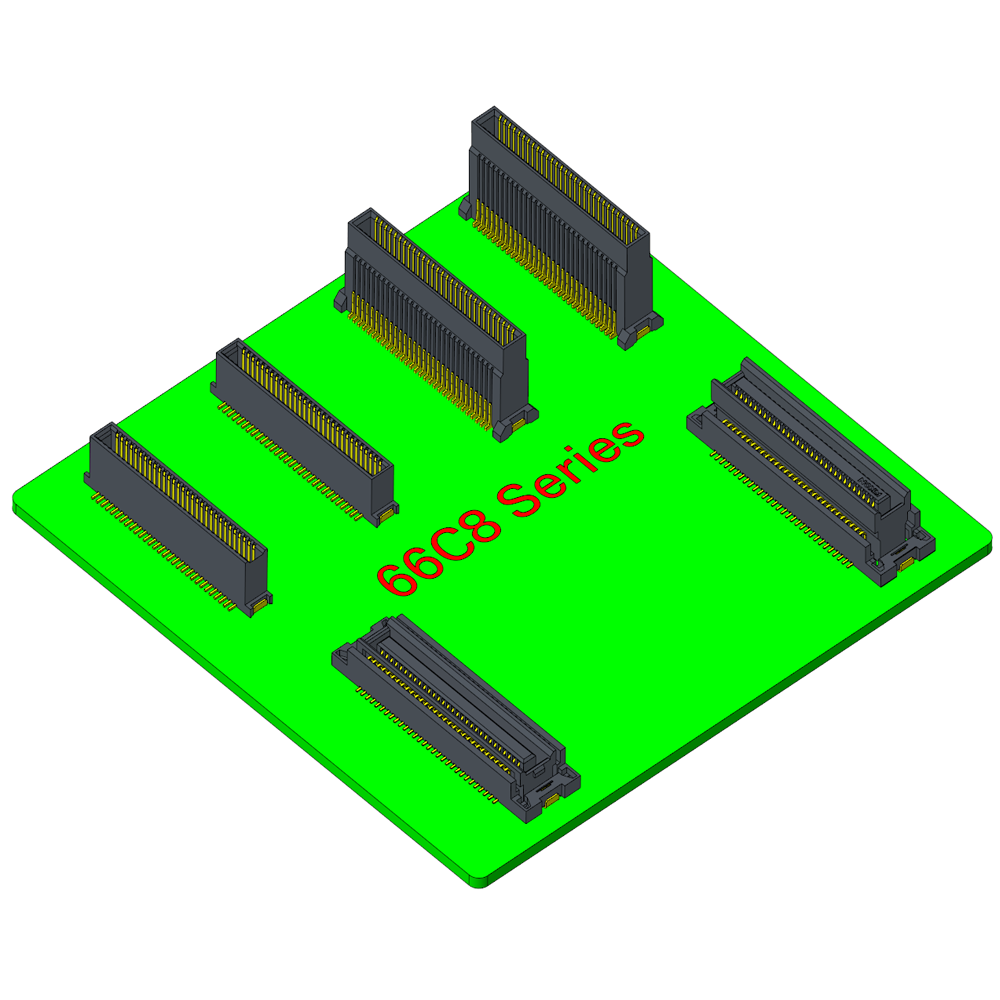
| 66C8 Floating Signal BTB | 0.80 mm | 20 / 30 / 40 / 60 / 80 pins | 6 / 8 / 9 / 11.75 / 12.75 / 14.25 / 20.15 mm | PA9T | 500+ | Vibration-tolerant signal interconnects, PCB misalignment absorption and industrial module stacking |
| 66A2 Power + Signal Floating BTB | 0.50 mm | 20 / 30 / 40 / 60 / 80 / 100 / 120 pins | 8 / 10 / 12 / 15 / 19 / 20 / 30 mm | LCP | 500+ | Compact power + signal board-to-board applications in automotive electronics and industrial control modules |
Representative Floating BTB Connector Options
Product images should use the final WebP files uploaded to WordPress. The HTML below does not hotlink external Solepin images.
66C8 0.80 mm Floating Signal BTB
0.80 mm floating board-to-board connector series with 20, 30, 40, 60 and 80 pin options and multiple mated-height choices.
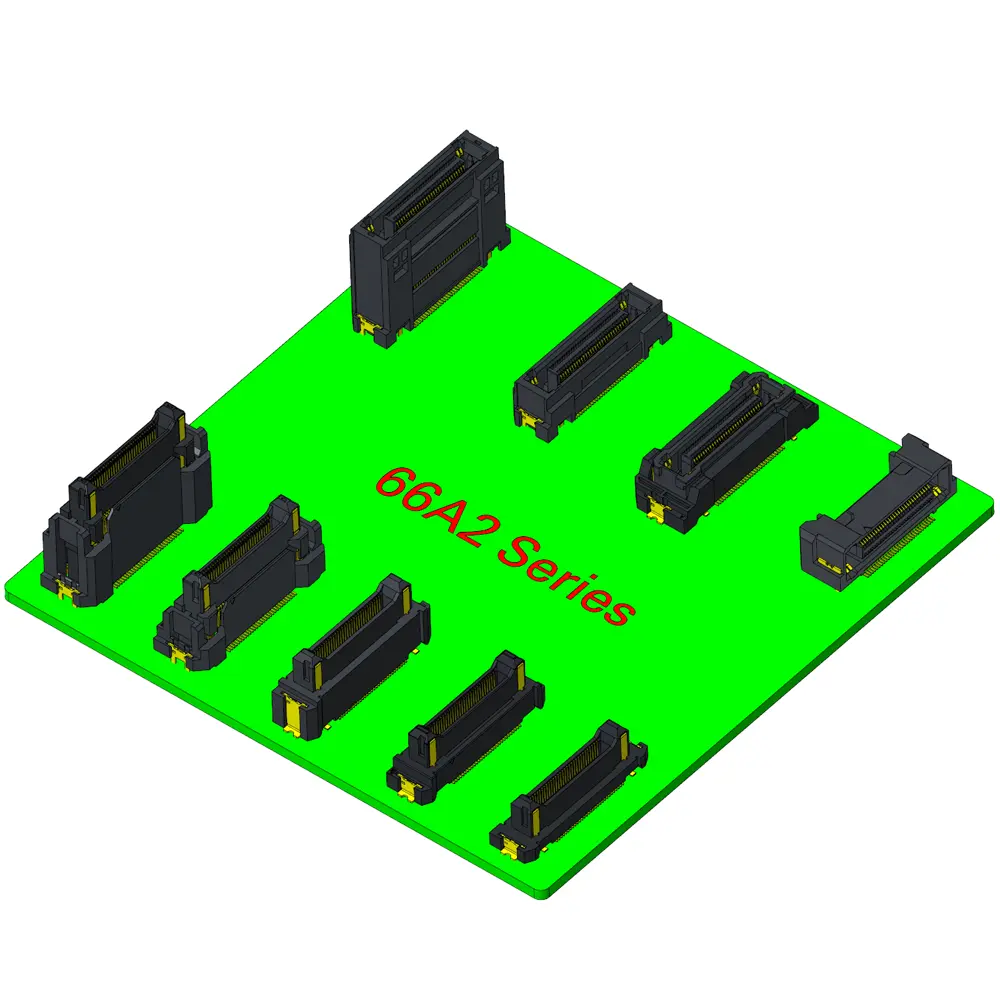
66A2 0.50 mm Power + Signal Floating BTB
0.50 mm power + signal floating connector series with 20 to 120 pin options and 8 to 30 mm listed mated-height choices.
Custom Floating Connector Review
Send your current part number, drawing, PCB spacing, tolerance requirement, application environment and expected volume for review.
Floating Connectors for Automotive, Industrial and Automation Electronics
Floating board-to-board connectors are a good fit for electronic modules where the connector must help tolerate assembly variation while maintaining a compact board-level interconnect. For RFQ review, send the expected tolerance, vibration environment, PCB spacing and connector reference.
- Automotive electronics and control modules
- Industrial control boards and equipment interfaces
- Servo motor drives and inverter control modules
- Robotic arm and factory automation systems
- Power + signal PCB module connections
- Vibration-sensitive board-stacking applications
What to Provide Before Selecting a Floating Connector
Floating connector selection should be reviewed as a mechanical and electrical design decision. The correct series depends on PCB layout, mating direction, available height, pin count, signal or power path and the real tolerance condition inside the device.
Mechanical Requirements
Provide pitch, pin count, mated height, PCB spacing, available board area, mating direction, expected offset and vibration environment.
Electrical Requirements
Confirm whether the connector is used for signal, power or power + signal transmission. Share current path and signal requirements if available.
Project Information
Send existing part number, drawing, sample photos, annual volume, validation plan, sample schedule and any preferred pin-compatible reference.
Structure Design, Tooling Review and Quality Control
Source materials describe engineering support around 3D modeling, mold-flow review, contact stress analysis and production processes such as molding, stamping, tooling, assembly and automated production. For actual orders, request the latest drawing, material confirmation and inspection requirements during RFQ.
Requirement Review
Review the connector type, board spacing, tolerance condition, vibration environment, pin count and electrical path.
Structure & Material Check
Check floating structure, housing material, mating interface, contact design and manufacturability before sample confirmation.
Sample Validation
Confirm mechanical fit, mating feel, board alignment, application environment and electrical requirements with engineering samples.
Production Support
Support molding, stamping, assembly, inspection and delivery according to the confirmed drawing and project requirements.
Build a Complete Board-Level Interconnect Solution
Floating board-to-board connectors are often reviewed together with standard board-to-board connectors, high-speed connectors, card-edge connectors, wire-to-board connectors and cable assemblies.
Products
Main LinkManu product category page for board-level connectors, wire-to-board connectors and cable assemblies.
Board-to-Board Connectors
Standard pitch, pin count, stack height, mating direction and board-stacking connector options.
High-Speed Connectors
Connector options for signal-rate, SI-review and high-speed PCB interconnect applications.
Card Edge Connectors
PCB edge, slot and card-interface connector options for industrial and board-level applications.
Wire-to-Board Connectors
PCB-to-wire signal and power connector options when a cable-side assembly is required.
Cable Assemblies
Custom cable and wire harness support for equipment wiring, connector matching and assembly review.
Connector Cross Reference
Submit an existing connector part number, drawing or sample for selected pin-compatible alternative review.
RFQ
Send pitch, pin count, mated height, tolerance requirement, drawing, sample request and expected volume.
LinkManu Home
Learn more about LinkManu connector sourcing, engineering review and RFQ support.
Floating Board-to-Board Connector FAQs
What is a floating board-to-board connector?
A floating board-to-board connector is a PCB interconnect designed with a floating structure that helps absorb practical board misalignment, assembly tolerance and vibration-related stress between two mated boards.
When should I choose a floating connector instead of a standard board-to-board connector?
Choose a floating connector when the application has PCB alignment variation, vibration, guided mating, blind mating or tolerance-sensitive module assembly. Standard board-to-board connectors are better for designs where board alignment and mechanical tolerance are tightly controlled.
What information is needed for a floating connector RFQ?
Please provide pitch, pin count, mated height, PCB spacing, mating direction, expected offset or tolerance, vibration environment, signal or power requirement, target part number, drawing, sample quantity and expected annual volume.
Do you offer both signal and power + signal floating connectors?
Current source-supported floating series include the 66C8 0.80 mm floating signal board-to-board connector and the 66A2 0.50 mm power + signal floating board-to-board connector.
Can LinkManu review Samtec, Molex, HRS or TE references?
For Samtec, Molex, HRS or TE connector references, selected pin-compatible alternatives may be reviewed. LinkManu does not describe them as perfect replacements. Final approval should be based on drawings, footprint, mating height, electrical requirements and customer validation.
Send Your Floating Board-to-Board Connector Requirement
Share your pitch, pin count, mated height, PCB spacing, mating direction, tolerance requirement, vibration environment, current part number, drawing or sample photo. LinkManu will review suitable floating BTB connector options, sample needs and quotation details.