
Automotive Wiring Harness Guide
What Is a Wiring Harness on a Car? Connectors and Assemblies
A car wiring harness is the organized assembly that routes electrical power and signals between sensors, control modules, lighting, motors, and other vehicle systems. When a buyer asks what is a wiring harness on a car, the useful answer should go beyond a definition. The real question is whether the connector, cable, routing, and test requirements are clear enough for a supplier to quote and build the same assembly repeatedly.
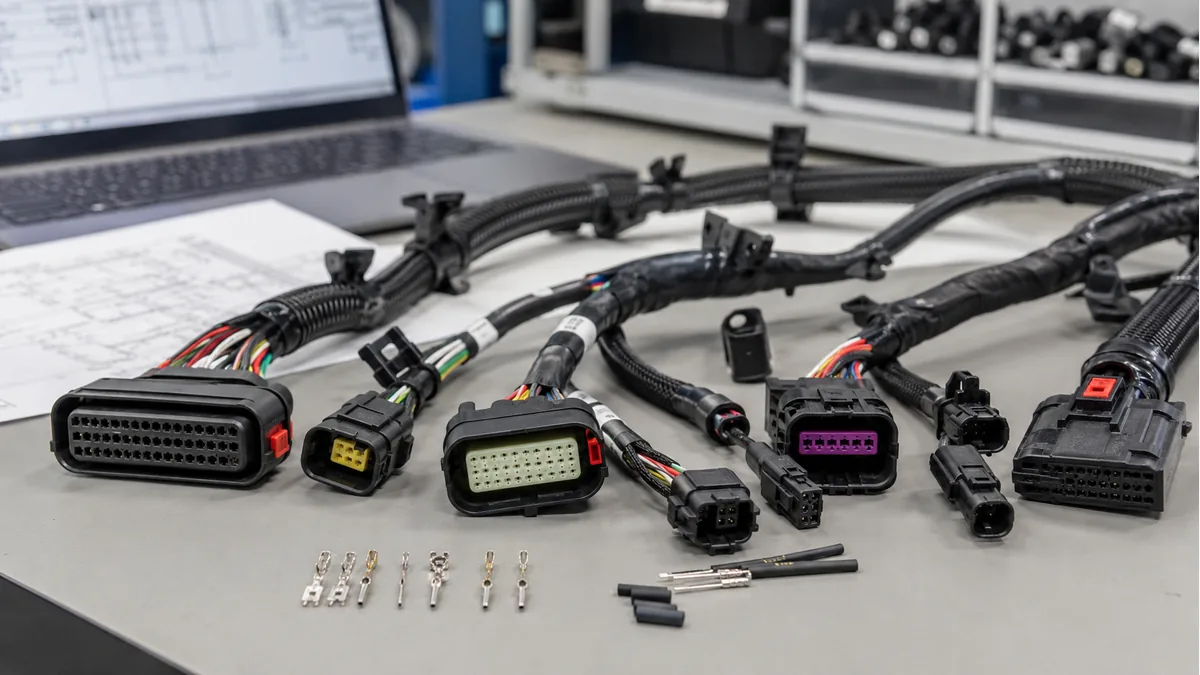
What a Car Wiring Harness Actually Contains
A harness is not just a bundle of wires wrapped in tape. It normally brings together connector housings, terminals, wires, protective coverings, seals where needed, labels, clips, and branch points. If one of those items is vague in the drawing, the supplier may still quote, but the first sample can miss the real vehicle requirement.
The connector interface deserves early attention because it controls how the harness mates to the rest of the vehicle. Before release, buyers should confirm the connector family, pin count, locking method, terminal type, cable specification, wire gauge, length, shielding needs, and any inspection documents required for approval. For broader application context, see LinkManu’s Automotive Electronics Connector Solutions.
Engineering check: if the drawing only says “automotive harness” without connector part references, mating details, wire list, and test scope, treat the RFQ as incomplete. Clarify those points before comparing supplier prices.
Connector Choices That Change Harness Risk
Many harness problems begin at the connector, not in the cable bundle. A connector that is acceptable in a dry cabin location may be a poor choice near splash, heat, vibration, or repeated service handling. The purchasing risk is simple: a low unit price can hide a higher cost in sample rework, line troubleshooting, and late drawing changes.
| Decision Area | What to Confirm | Why It Matters |
|---|---|---|
| Connector fit | Mating connector, latch style, polarization, and assembly direction | Wrong fit can cause sample delays even when the wire list is correct. |
| Terminal and crimp | Terminal series, crimp requirement, pull-force requirement, and inspection method | Weak crimp control can create intermittent electrical faults under vibration. |
| Environment | Dry, splash-exposed, under-hood, or chassis location | The location decides whether sealing, strain relief, and protection need special review. |
| Cable specification | Wire gauge, insulation, shielding, color, length tolerance, and branch layout | Small cable changes can affect routing, voltage drop, service access, and assembly fit. |
| Documentation | Drawing revision, BOM, sample approval, and required test records | Missing documentation makes repeat production harder to control. |
Where Harness Specifications Often Go Wrong
One common mistake is treating the harness as a purchasing description instead of an engineering assembly. “Use automotive connector” is not enough. The supplier needs to know whether the connection will face vibration, fluids, heat exposure, tight routing, frequent service removal, or high-current heat rise. Without that context, the safest answer is to ask for the missing application details before recommending a connector or tooling path.
Another mistake is copying a connector choice from a different vehicle zone. A cabin harness, door harness, engine harness, and underbody harness do not face the same risks. If the application zone changes, review the locking structure, sealing approach, cable protection, and inspection plan again instead of assuming the same connector family is still suitable.
What to Prepare Before Sending an RFQ
A good RFQ saves time because it separates known requirements from open engineering questions. If the drawing is still early, say that clearly. LinkManu can review whether a standard connector approach, custom connector support, or a more detailed harness assembly review is appropriate, but feasibility still depends on the drawing, sample, mating interface, and required documentation. For custom connector projects, review the scope through Custom Connector Support.
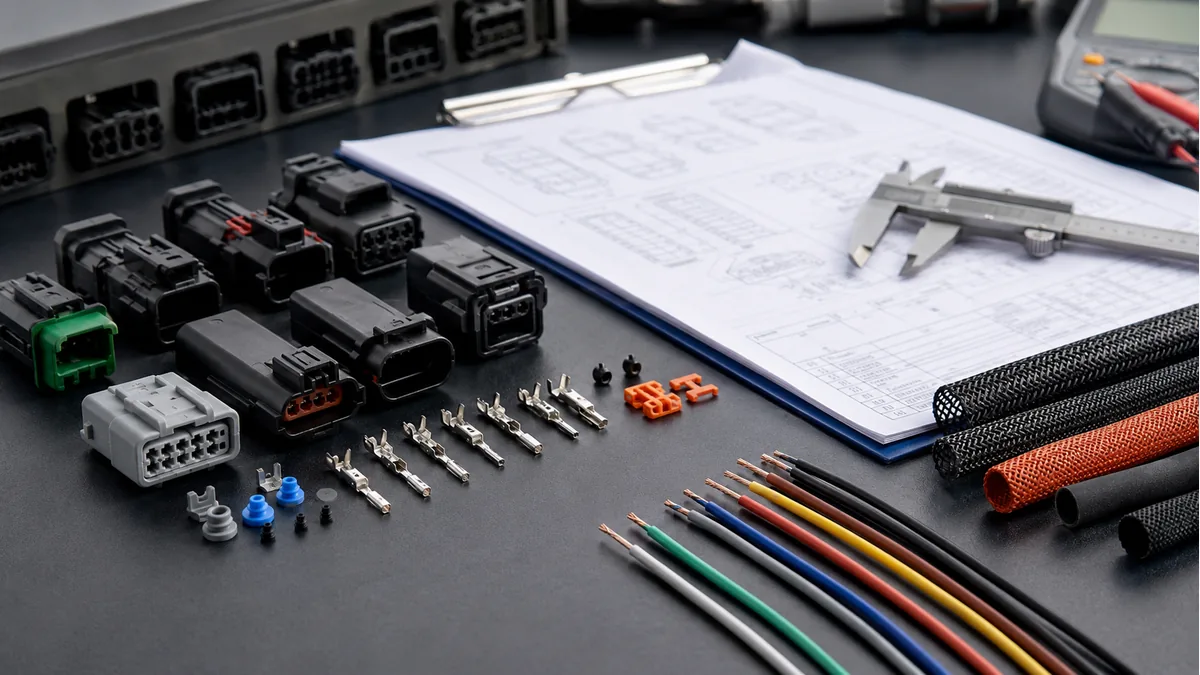
- Send the latest drawing revision, BOM, or sample photos, and mark any dimensions that are still open.
- Confirm connector type, mating connector, pin count, cable specification, wire gauge, length, shielding, and branch layout.
- Define the installation zone so sealing, cable protection, locking, and strain relief can be reviewed correctly.
- List required checks such as continuity, pull-force, insertion/extraction force, temperature rise, hi-pot, salt spray, or other project-specific tests.
- Clarify whether you need samples, tooling review, production quotation, or only an early feasibility check.
Manufacturing and Quality Review Points
Company materials for LinkManu’s connector supply chain list tooling, injection molding, stamping, assembly, and inspection before shipment as relevant process steps. That does not mean every harness project uses every process. It means the RFQ should identify which parts of the connector or harness are custom, which parts are standard, and which checks must be documented before shipment.
Quality review should be tied to the risk of the assembly. For example, a simple interior harness may need a different approval package than a sealed harness near moisture or vibration. When project requirements call for additional verification, testing such as insertion/extraction force, hi-pot, temperature rise, or salt spray may be discussed and arranged according to the final specification. For the broader review framework, see Engineering & Quality.
Practical Next Step
Before choosing a supplier, gather the drawing, connector family, pin count, cable specification, wire gauge, harness length, installation environment, and required test documentation. If any of those items are missing, mark them as open questions instead of hiding them in the quote request. For schedule planning, review lead time for automotive connector assemblies before setting a sample or production date.
Frequently Asked Questions
What is the description of a wiring harness?
It is an organized assembly of wires, terminals, connectors, protective coverings, and routing parts that carries power and signals through a vehicle.
What gauge is an automotive wiring harness?
There is no single gauge for every harness. The correct wire gauge depends on current draw, voltage drop, cable length, temperature exposure, and the original drawing or specification.
What are wiring harness connectors?
They are the plug-and-socket interfaces that connect the harness to sensors, modules, lamps, motors, and other vehicle devices. Fit, locking, terminals, and sealing must match the application.
How do I know what wiring harness I need?
Start with the mating devices, circuit list, wire gauge, connector type, harness length, routing zone, environment, and required test documents. A supplier can review feasibility after those items are clear.
Send Your Connector Requirement
Share your drawing, BOM, target application, sample photos, or open engineering questions. LinkManu can review connector fit, cable assembly scope, documentation needs, and RFQ readiness before final selection.
 Technical content reviewed by LinkManu Engineering Team.
Prepared by LinkManu Editorial Team for B2B connector engineers, sourcing teams, and product development projects. Updated 2026.